
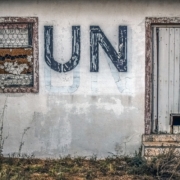
What happened when the UN went into the Congo?
Topic of Study [For H2 History 9174 Students]:
Paper 1: Conflict and Cooperation (1945-2000)
Section B: Essay Writing
Theme III Chapter 4: Intra-State Conflicts [Congo Crisis, 1960-1965]
Hammarskjöld’s gauntlet: Introducing the ONUC
Barely two weeks after gaining independence, the Congo was beset by political infighting within the central government (based on Leopoldville), ethnic divisions and nation-wide unrest. The Leopoldville government turned to the United Nations (UN) for assistance on 12 July 1960 to restore order and protect civilians.
The UN Secretary-General (UNSC) Dag Hammarskjöld’s invoked Article 99 of the UN Charter for the first time, convening an emergency meeting of the UN Security Council (UNSC). Subsequently, UNSC Resolution (UNSCR) 143 was adopted, calling upon Belgium to withdraw its forces from Congo and authorising the formation of the UN Operation in the Congo (ONUC).
Stuck on H2 History?
These notes are free, but they’re not the same as sitting in a class where someone marks your essays and tells you exactly what’s costing you marks. We run small-group H2 History tuition in Bedok, or online if that’s easier.
The UN Operation in the Congo (ONUC) was initially sent under the authority of the Security Council at the request of the government of the Congo in July 1960, to provide assistance to that government until the Congolese security forces could fulfil their tasks following the breakdown of order on Belgian decolonisation.
An excerpt taken from “Keeping the Peace: The United Nations and the Maintenance of International Peace and Security”
By the time ONUC arrived it was in a precarious position, with fighting continuing in the Congo, rival governments being established, and attempted secession of the Katanga region of the country with the active assistance of Belgian troops and mercenaries.
by Nigel D. White (1993).
Volatile and uncertain: Lumumba’s death and its implications on the UN
However, the ONUC was faced with a volatile situation in the Congo. Unlike the straightforward peacekeeping (i.e. United Nations Emergency Force, UNEF I) undertaking in response to the Suez Canal Crisis in 1956, the ONUC was ill-equipped to prevent the collapse of a newly-independent Congo.
In August 1960, South Kasai declared its autonomy from the central government, intensifying the civil unrest. Furthermore, the political infighting within the central government resulted in a constitutional crisis that concluded with a coup by General Mobutu and the downfall of Prime Minister Patrice Lumumba.
In essence, the Prime Minister’s demise was linked to the UN’s mismanagement, thereby alienating the pro-Soviet and Afro-Asian blocs. The ONUC was implicated by this intra-UN disunity, seen in terms of the withdrawal of national contingents from the UN operation by Third World member nations like Morocco and Sudan.
Renewed UN mandates for the ONUC: 161 and 169
Nonetheless, there was renewed vigor within the UN as UNSC 161 was adopted in February 1961, authorising the ONUC to use force “if necessary, in the last resort” to prevent the outbreak of a civil war.
Between August and September 1961, the ONUC launched two operations – “Rum Punch” and “Morthor” – that targeted the Katanga province. Yet, these operations were hampered by hostile Katangese forces. During the Siege of Jadotville, 155 Irish UN troops were attacked by Tshombe’s forces, such that Operation Morthor concluded with the death of 13 UN troops and 200 Katangese civilians and troops.
The UNSC went further by expanding the ONUC’s mandate in November 1961, as seen by UNSCR 169 to authorise the use of peace enforcement to maintain the territorial integrity and political independence of the Congo. More importantly, the ONUC was empowered to assist the Leopoldville government to secure the “immediate withdrawal and evaluation from the Congo of all foreign military” and mercenaries.
Join our JC History Tuition to learn more about the Congo Crisis under the theme of Conflict and Cooperation. The H2 History Tuition feature online discussion and writing practices to enhance your knowledge application skills. Get useful study notes and clarify your doubts on the subject with the tutor. You can also follow our Telegram Channel to get useful updates.
Stuck on H2 History?
These notes are free, but they’re not the same as sitting in a class where someone marks your essays and tells you exactly what’s costing you marks. We run small-group H2 History tuition in Bedok, or online if that’s easier.