
 Pixabay
Why did the oil crisis happen?
Topic of Study [For H2 History Students, 9174]:
Paper 1: The Development of the Global Economy (1945-2000)
Section B: Essay Writing
Theme II Chapter 1: Challenges in the Global Economy
The first oil shock of 1973
During the Yom Kippur War, Arab members of the Organisation of Petroleum Exporting Countries (OPEC) imposed an oil embargo to protest nations that backed Israel, particularly the United States (USA). This was in response to the US government’s attempt to resupply the Israeli military (see ‘Operation Nickel Grass‘).
The embargo banned petroleum exports to the affected nations, destabilising the pricing system and straining oil-reliant economies. As a result of OPEC’s decision, crude oil price rose from $3 per barrel to $12 per barrel by 1974.
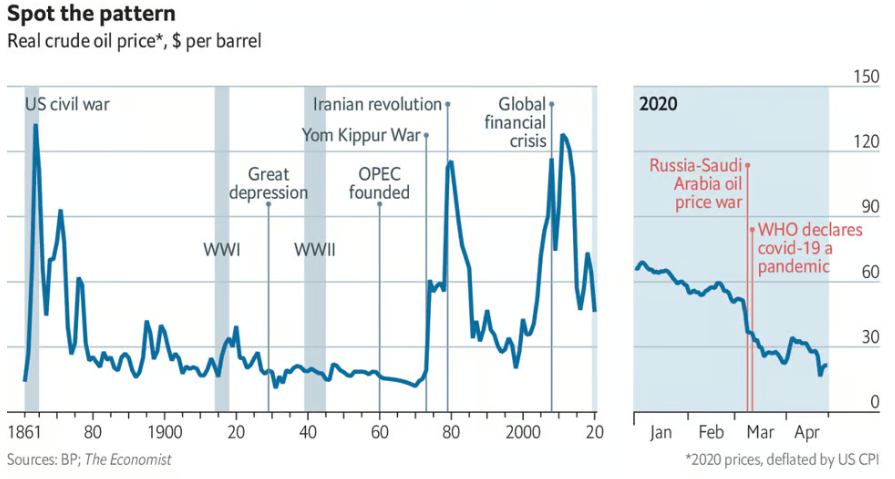
Source: The Economist
In addition, the first oil shock coincided with the disastrous collapse of the Bretton Woods System, which saw the end of a gold-dollar fixed exchange rate system. The devaluation of the US dollar further exacerbated the adverse impacts of the energy crisis, plunging the USA and other Western industrialised nations into a recession.
The major oil firms, as well as their home governments, were not merely unprepared for the oil shock. They had become so accustomed to business as usual that they disregarded warning signs that the world was about to change, or change a lot faster than they realised. […] The combined effects of the embargo, oil price increases and the collapse of the concession system abruptly ended the post-World War II petroleum order.
Extracted from “Oil Shock: The 1973 Crisis and its Economic Legacy” (2016) by Elisabetta Bini, Federico Romero and Giuliano Garavini.
The second oil shock of 1979
The 1978 Iranian Revolution concluded with the end of Shah Mohammad Reza Pahlavi’s rule, ushering the rise of Ayatollah Khomeini’s Islamic Republic. As a result of said revolution, Iranian oil production fell by 4.8 million barrels per day, which occupied 7 percent of the global oil production by January 1979.
The political turmoil in Iran triggered widespread panic as oil-reliant nations began to hoard oil. The second oil crisis saw a surge of the price of global West Texas Intermediate (WTI) [benchmark for global oil price] from US$15 per barrel in September 1978 to US$40 per barrel in April 1980.
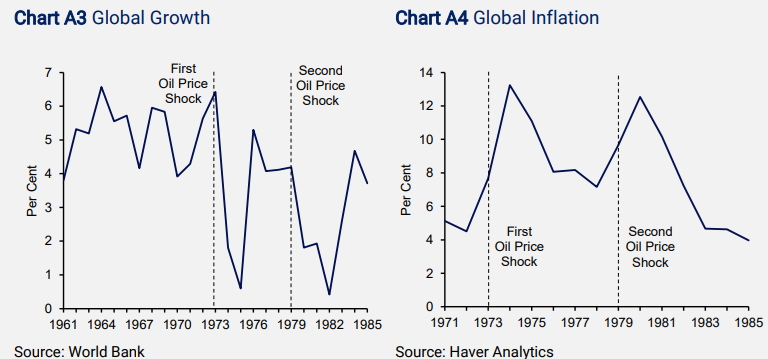
Source: Monetary Authority of Singapore (MAS)
The 1979 oil crisis had a profound impact on the global economy. It amplified the already existing inflationary pressures, a carryover from the monetary policies and commodity price shocks of the early to mid-1970s. The rising cost of energy rippled through the economy, increasing the price of everything from transportation and manufacturing to food production and heading. This led to stagflation – a combination of high inflation and slow economic growth – which plagued many Western economies during this period.
Extracted from “Inflation Surge Explained” by Gideon Fairchild (2025).
Join our JC History Tuition to learn more about the Global Economy. The H2 and H1 History Tuition feature online discussion and writing practices to enhance your knowledge application skills. Get useful study notes and clarify your doubts on the subject with the tutor. You can also follow our Telegram Channel to get useful updates.
Call 8929 2422 to find out more.