
What is World Trade Organization and its function?

Topic of Study [For H2 History Students]: 
Paper 1: Understanding the Global Economy (1945-2000)
Section B: Essay Writing
Theme II Chapters 1: Reasons for growth of the global economy & Problems of economic liberalisation

What is the World Trade Organization (WTO)?
The WTO is an inter-governmental organization that formalized international trade. Under the Marrakesh Agreement, the organization was formed on 1 January 1995, replacing the multilateral framework known as the General Agreement on Tariffs and Trade (GATT).

A Prelude to WTO: Trade Rounds under GATT
Before the WTO was established, GATT provided the essential guidelines on international trade from 1948 to 1994. During the Bretton Woods Conference, an International Trade Organization (ITO) was supposed to be formed alongside two other pillars (World Bank and the International Monetary Fund). Yet, the US Congress refused to ratify the Havana Charter. As such, the concept of an ITO was not realized.

Even so, GATT had played its part in promoting multilateral discussions. In the post-war years, GATT contributed to tariff reductions of nearly 8 percent on average till the 1960s.

1. Kennedy Round (1964-1967)
During the Kennedy Round, an Anti-Dumping Agreement was passed. ‘Dumping’ refers to an unfair trade practice in which a firm sell its exports at a price below the price set in the domestic market. The Act was recognized as a success, especially for developing nations.

Recognizing that anti-dumping practices should not constitute an unjustifiable impediment to international trade and that anti-dumping duties may be applied against dumping only if such dumping causes or threatens material injury to an established industry or materially retards the establishment of an industry;

Considering that it is desirable to provide for equitable and open procedures as the basis for a full examination of dumping cases;

An excerpt from the Kennedy Round.

2. Tokyo Round (1973-1979)
In the 1970s, the Tokyo Round was held with the intention to manage the imposition of non-tariff barriers (NTBs). Although participating countries managed to agree on the reduction of tariffs on industrial goods, they were unable to accept the use of plurilateral agreements (they are trade agreements between more than two countries).

The Tokyo Round also led to the adoption of a range of specific new disciplines. These included the legalization of preferential tariff and nontariff treatment in favour of developing countries and among developing countries.

Codes were negotiated on subsidies and countervailing measures, technical barriers to trade (product standards), government procurement, customs valuation, import licensing, antidumping (a revision of a Kennedy Round code), bovine meat, dairy products and civil aircraft…

By negotiating a code, like-minded countries were able to agree to new, legally binding commitments, without having all GATT contracting parties on board.

An excerpt from “The Political Economy of the World Trading System” by Bernard M. Hoekman, Michel M. Kostecki

3. Uruguay Round (1986-1994)
The eighth and final round lasted nearly seven and a half years. In the wake of the twin oil shocks of the 1970s, the Uruguay Round was held as the largest multilateral trade negotiation. The main purpose of the round was to reduce agricultural subsidies, introduce the protection of intellectual property and liberalise trade services in the banking sector. It was a tricky issue due to the sensitivity of the agricultural and textile sectors that affected many developing countries. Furthermore, the round dragged on due to the lack of consensus between the USA and European Union (EU) [also known as the “European Community”, EC] over the reforms to agricultural trade.

For much of the Round the USA and the EC held their own mini-round and their mutual intransigence, especially over agriculture and specifically a long-running dispute over oil seeds, stalled the Uruguay Round for some time. Completion of the Round was in the end facilitated by the so-called Blair House (Washington) accords…

Negotiations on agriculture were among the most contentious of the Round, the final Agreement on Agriculture seeking reforms for a ‘fair and market-oriented agricultural trading system’, but with special consideration for poorer countries and for non-trade concerns such as food security, environmental protection or schemes for diversification from narcotic crops and the like.

An excerpt from “The Free Trade Adventure: The WTO, the Uruguay Round and Globalism–a Critique” by Graham Dunkley.

The WTO
As the Uruguay Round concluded in December 1993, the Marrakesh Agreement was signed on 15 April 1994 by 123 participating nations. Officially, the WTO was formed eight months later, ushering a new era for international trade. The WTO replaced GATT as the institutional framework for trade.

1. The WTO shall facilitate the implementation, administration and operation, and further the objectives, of this Agreement and of the Multilateral Trade Agreements, and shall also provide the framework for the implementation, administration and operation of the Plurilateral Trade Agreements.

2. The WTO shall provide the forum for negotiations among its Members concerning their multilateral trade relations in matters dealt with under the agreements in the Annexes to this Agreement. The WTO may also provide a forum for further negotiations among its Members concerning their multilateral trade relations, and a framework for the implementation of the results of such negotiations, as may be decided by the Ministerial Conference.

An excerpt from the Marrakesh Agreement – Article 3 “Functions of the WTO”, 15 April 1994.

What can we learn from this article?
Consider the following question:
– How far do you agree that trade liberalization was beneficial to the global economy from 1945 to 2000?

Join our JC History Tuition and find out more about the Bretton Woods System and other areas relating to the global economy. The H2 and H1 History Tuition feature online discussion and writing practices to enhance your knowledge application skills. Get useful study notes and clarify your doubts on the subject with the tutor. You can also follow our Telegram Channel to get useful updates.

We have other JC tuition classes, such as JC Math Tuition and JC Chemistry Tuition. For Secondary Tuition, we provide Secondary English Tuition, Secondary Math tuition, Secondary Chemistry Tuition, Social Studies Tuition, Geography, History Tuition and Secondary Economics Tuition. For Primary Tuition, we have Primary English, Math and Science Tuition. Call 9658 5789 to find out more.
What is Singapore’s Foreign Policy?

Topic of Study [For H1 History Students]: 
Section B: Essay Writing
Theme II: Cold War in Asia [1945-1991] – Singapore’s Foreign Policy during the Cold War

“We have no eternal allies, and we have no perpetual enemies. Our interests are eternal and perpetual, and those interests it is our duty to follow.”

— Lord Palmerston, House of Commons, 1 March 1848

What is a ‘foreign policy’?
It refers to a set of strategies employed by the state to protect its domestic and international interests. A ‘foreign policy’ affects the state’s interactions with other states. Ultimately, the policy is implemented to safeguard national interests.

Foreign policies can involve the use of aggressive (military force) or non-coercive means (diplomacy). Also, these policies can also be carried out through engagement with other states in addressing a common challenge, such as regional security threats.

Singapore’s foreign policy: A summary
There are two key foreign policy theories that are covered the A Level H1 History syllabus: Survival and Realism.

1. Survival
One key ideology that shaped Singapore’s foreign policy is the concept of survival. Following the sudden Separation that led to Singapore’s independence in 1965, the government had to deal with political threats and economic challenges.

Amidst the Cold War context, the rise of Communist insurgencies was a common concern that affected the political stability of Southeast Asian nations. In Singapore, the government was challenged by the Barisan Sosialis.

As for the economic viewpoint, the People’s Action Party (PAP) took the first step towards modernisation by embarking on state-led industrialisation. In particular, the government aimed to establish strong trade ties with other countries, including Great Powers like the USA.

The historical roots of Singapore’s political ideology of survival lie in the events following the country’s ejection from Malaysia in 1965. Survival in both political and economic terms for newly independent Singapore was a very real issue for the PAP Government. The government in the period 1965-67 was involved in an intense, often violent struggle, for power against the Barisan Sosialis and the communists.

…In terms of economic policy, the survival ideology is linked with the concept of the “global city” first proposed in 1972 by Singapore Foreign Minister S. Rajaratnam. This concept suggests that if Singapore is to survive, it must establish a relationship of interdependence in the rapidly expanding global economic system.

An excerpt from “SINGAPORE: Reconciling the Survival Ideology with the Achievement Concept” by Lee Boon-Hiok [from the Southeast Asian Affairs 1978]

2. Realism
Realism describes the notion that states should act according to their best interest. From a realist’s perspective, the world is in a constant state of anarchy. Individuals are inherently egoistic and will do anything to pursue power. As such, states should protect their interests through means like the development of an independent defence force as well as the conduct of diplomacy.

Singapore’s interpretation of such a concept and practice was spelled out by Lee Hsien Loong in the same speech as follows:

This policy depends on the competing interests of several big powers in a region, rather than on linking the nation’s fortunes to one overbearing partner. The big powers can keep one another in check and will prevent any one of them from dominating the entire region, and so allow small states to survive in the interstices between them. It is not a foolproof method, as the equilibrium is a dynamic and possibly unstable one, and may be upset if one power changes course and withdraws. Nor can a small state manipulate the big powers with impunity. The most it can hope to do is to influence their policies in its favour.

An excerpt from “Singapore’s Foreign Policy: Coping with Vulnerability” by Michael Leifer

More importantly, Singapore did not rely solely on the goodwill of external powers to manage security challenges. Its emphasis on regionalism and multilateralism was also another vital channel, seen in terms of Singapore’s diplomatic role in ASEAN and the United Nations.

Through Singapore’s consistent lobbying efforts at the United Nations General Assembly, the government was successful in publicise the Cambodian conflict at the international level.

Singapore’s Ministry of Foreign Affairs distinguished itself as a diplomatic dynamo during the course of the Cambodian conflict. The advocacy, lobbying and drafting skills of its officials were employed to great effect within the United Nations against Vietnam and its client government in Phnom Penh. For example, the declaration of the International Conference on Kampuchea held at the UN in 1981 was drafted by Singapore’s delegation. Singapore’s diplomatic success was accomplished through playing on the political sensibilities of states that had been alarmed by the example of a government despatching its army across an internationally recognised boundary to remove an incumbent administration recognised at the United Nations and replacing it with another of its own manufacture.

An excerpt from “Singapore’s Foreign Policy: Coping with Vulnerability” by Michael Leifer

What can we learn from this article?
Consider the following question:
– Assess the view that Singapore’s foreign policy was largely shaped by Realism.

Join our JC History Tuition and learn more about Singapore’s foreign policy in response to the Second and Third Indochina Wars.

The H2 and H1 History Tuition feature online discussion and writing practices to enhance your knowledge application skills. Get useful study notes and clarify your doubts on the subject with the tutor. You can also follow our Telegram Channel to get useful updates.

We have other JC tuition classes, such as JC Math Tuition and JC Chemistry Tuition. For Secondary Tuition, we provide Secondary English Tuition, Secondary Math tuition, Secondary Chemistry Tuition, Social Studies Tuition, Geography, History Tuition and Secondary Economics Tuition. For Primary Tuition, we have Primary English, Math and Science Tuition. Call 9658 5789 to find out more.
What is New Order?

Topic of Study [For H2 History Students]:
Paper 2: Search for Political Stability
Section B: Essay Writing
Theme I Chapter 1: Approaches to Governance

Historical Context: The 30 September movement
After President Sukarno declared the start of the “Guided Democracy” in 1957, the Indonesian government consolidated political control to restore peace and stability in the nation. However, Sukarno encountered difficulties in managing two notable roles – the military and the Partai Kommunis Indonesia (PKI). As such, he sought to re-energise the Indonesian society through the campaign in West New Guinea and the Konfrontasi, declaring a revival of the Indonesian Revolution.

On 30 September 1965, an abortive coup had resulted in the deaths of six senior generals (later known as the Gerakan 30 September). As the leader of the KOSTRAD (Komando Strategis Angkatan Darat, also known as the Army Strategic Command), General Suharto investigated the incident. Subsequently, the PKI was accused of launching the coup.

The end of Guided Democracy: Supersemar
On 11 March 1966, President Sukarno signed a decree that granted Suharto full political authority to restore order in Indonesia. The transfer of executive power was known as Supersemar (Surat Perintah Sebelas Maret)

III. Memutuskan/Memerintahkan:

Kepada: LETNAN DJENDRAL SUHARTO MENTERI PANGLIMA ANGKATAN DARAT

Untuk: Atas nama Presiden/Panglima Tertinggi/Pemimpin Besar Revolusi:

1. Mengambil segala tindakan yang dianggap perlu untuk terdjaminnja keamanan dan ketenangan, serta kestabilan djalannja pemerintahan dan djalannja Revolusi, serta mendjamin keselamatan pribadi dan kewibawaan Pimpinan Presiden/Panglima Tertinggi/Pemimpin Besar Revolusi/Mandataris M.P.R.S. demi untuk keutuhan Bangsa dan Negara Republik Indonesia, dan melaksanakan dengan pasti segala adjaran Pemimpin Besar Revolusi.

Excerpt from Supersemar (Order of Eleventh March), 11 March 1966.

From the above extract, it states that General Suharto was granted the authority to take any necessary measures to guarantee the security, stability and progress of the Indonesian Revolution.

The New Order
After the Supersemar was signed, the PKI was banned. Between June to July 1966, the membership within the People’s Consultative Assembly (Majelis Permusyawaratan Rakyat Sementara), which operated as the legislative branch of the Indonesian political system, experienced a purge. Individuals that formerly supported Sukarno were removed on the basis of being involved in the 30 September Movement.

Agains the Cold War backdrop, the USA also made observations that the rise of Suharto was a notable development that ushered a period of political stability in Indonesia after Sukarno’s inability to manage the Communist threat in the 1950s and 1960s.

The regime of General Suharto has brought Indonesia to a stage of imposed political stability and the beginnings of economic revival. Although the army holds predominant and ultimate political power, civilian participation in government is considerable and effective.

The New Order sees its basic tasks as the restoration of the economy, the continued suppression of Communism, and the development of stable representative government which would include a substantial political role for the army.

An excerpt taken from the Weekly Summary Special Report: The New Order in Indonesia, Central Intelligence Agency, 11 August 1967.

After the New Order was established, Suharto granted the military a political role to maintain stability. The concept of dwifungsi (dual function) was implemented as a policy to legitimise its role.

Until the fall of Suharto, the military considered dwifungsi to be its function, reason and spirit. The missions of security and socio-political development were inseparable. By directing socio-political development, the military served to support the goals of development, political and social stability, defence and national integrity. Any deviant social or political movement that threatened the status quo was seen as a threat to national security.

An excerpt from “Power Politics and the Indonesian Military” by Damien Kingsbury

What can we learn from this article?
Consider the following question:
– Assess the significance of the military in maintaining political stability of Indonesia under the New Order regime.

Join our JC History Tuition and learn more about the history of Indonesia and other Southeast Asian states.

The H2 and H1 History Tuition feature online discussion and writing practices to enhance your knowledge application skills. Get useful study notes and clarify your doubts on the subject with the tutor. You can also follow our Telegram Channel to get useful updates.

We have other JC tuition classes, such as JC Math Tuition and JC Chemistry Tuition. For Secondary Tuition, we provide Secondary English Tuition, Secondary Math tuition, Secondary Chemistry Tuition, Social Studies Tuition, Geography, History Tuition and Secondary Economics Tuition. For Primary Tuition, we have Primary English, Math and Science Tuition. Call 9658 5789 to find out more.

When was Singapore’s bilingual policy implemented?

Topic of Study [For H2 History Students]:
Paper 2: Search for Political Stability
Section B: Essay Writing
Theme I Chapter 2: Approaches to National Unity

Historical context
Before independence was achieved in Singapore, its education system comprised of private vernacular schools and government-run schools. The former taught Chinese, Malay and Tamil, while the latter covered English.

On 8 December 1953, the British colonial government published a white paper (titled “Chinese Schools Bilingual Education and Increased Aid”) that proposed bilingual education in Chinese-medium schools. It suggested that financial assistance should be given to schools that taught the English language.

After Singapore attained self-government in 1959, then Prime Minister Lee Kuan Yew delivered a speech that highlighted the significance of bilingualism.

We have in Singapore about 320,000 students. Of these 51% are in English schools, 43 1/2% in Chinese schools, 5% in Malay schools and 1/2% in Tamil schools. If we do nothing about it, we shall produce citizens who can only communicate with those in their own language stream…

Hence the tremendous urgency of getting our students to be bilingual, or even trilingual. Malay is the national language and it should be possible, eventually, for everyone to understand each other through this language. But each racial and cultural group wants, at the same time, to study their mother tongue to keep their links with their cultural heritage. And the Government supports this. And for reasons of employment, many wish to study English as their first foreign language.

An excerpt from a speech by Prime Minister Mr Lee Kuan Yew at the Happy World Stadium, 8 December 1959.

As described by Mr Lee, English was taught as a common language for inter-ethnic communication. Also, this language was being emphasised on for business reasons. As for the ‘Mother Tongue’, it was necessary for ethnic communities to preserve their cultural heritage.

The Policy of Bilingualism in the 1960s
After Singapore became independent, the Malay, Mandarin, Tamil and English were recognised as the official languages in Singapore, as stated in Article 153A of the Singapore Constitution.

In 1966, the bilingual policy was implemented, in which all students were required to study English and a ‘Mother Tongue’ in schools. Over time, English became the common language for work and social interaction. Additionally, Mathematics and Science were taught in English.

Bilingualism must be emphasised in schools if we are to build a multi-racial society with a national identity

By using the second language as a medium of instruction, children would be exposed to that language for a much longer period and, moreover, would be compelled to speak it, write it and use it as a tool of communication

Excerpt from a speech by The Minister for Education, Mr. Ong Pang Boon, at the Annual Budget Statement of the Minister for Finance, 12 December 1968.

Reviewing the Bilingual Policy: The ‘Goh Report’
In 1978, then Deputy Prime Minister Goh Keng Swee and his team published a report (titled ‘Report on the Ministry of Education 1978’) that assessed the effectiveness of the education system in Singapore.

The report revealed that many students struggled to grasp two languages due to the lack of familiarity. For instance, nearly 85% of the Chinese students communicated in dialects at home. As such, English and Mandarin were relatively new to them.

On 5 March 1978, Nanyang University announced that it will prepare undergraduates for the same examination as the University of Singapore. this meant instruction in the English language and written examinations in that language.

An excerpt from the Report on the Ministry of Education 1978 by Dr Goh Keng Swee, 10 February 1979

As such, the New Education System was established in 1979, which included streaming at the primary and secondary levels. Besides, language proficiency was also considered for university admission.

What can we learn from this article?
Consider the following question:
– Assess the importance of education in supporting the Singapore Government’s efforts at forging national unity.

Join our JC History Tuition and learn to write essays for topics like Approaches to National Unity.

The H2 and H1 History Tuition feature online discussion and writing practices to enhance your knowledge application skills. Get useful study notes and clarify your doubts on the subject with the tutor. You can also follow our Telegram Channel to get useful updates.

We have other JC tuition classes, such as JC Math Tuition and JC Chemistry Tuition. For Secondary Tuition, we provide Secondary English Tuition, Secondary Math tuition, Secondary Chemistry Tuition, Social Studies Tuition, Geography, History Tuition and Secondary Economics Tuition. For Primary Tuition, we have Primary English, Math and Science Tuition. Call 9658 5789 to find out more.
What is the New Society Movement?

Topic of Study [For H2 History Students]:
Paper 2: Search for Political Stability
Section B: Essay Writing
Theme I Chapter 1: Approaches to Governance

Historical context: Declaration of the Martial Law
After Ferdinand Marcos held the second term as President of the Philippines in 1969, the government was hampered by the growing political divisions as well as the outbreak of rebellions.

On 23 September 1972, Marcos declared Martial Law, thus ushering a period of authoritarian rule.

Formation of the New Society Movement
In 1978, Marcos announced that elections would be held to form the Interim National Assembly (Interim Batasang Pambansa). In February, he formed the New Society Movement (Kilusang Bagong Lipunan, KBL) that included officials from the Liberal and Nacionalista Parties.

It derived its name from the phrase Bagong Lipunan (“new society”), which Marcos claimed he was establishing with the Martial Law regime: a new society in the sense that it would be rid of the old society’s ills, such as graft and corruption, indiscipline, lack of respect for authority…

An excerpt from “Southeast Asia: A Historical Encyclopedia, from Angkor Wat to East Timor” (by Keat Gin Ooi).

The New Society ideology
Additionally, Marcos advocated the “New Society” to pursue economic modernisation and legitimse his rule.

We speak of a New Society…[Ours is] the dream that someday under somebody, we will be able to build a society that will give every man dignity and decency. And it shall return rationality into our political institutions, into our economy, and into our society… and this dream is what we are trying to implement now. It is the dream of every Filipino…that aspires for progress and modernization.”

An excerpt from “Development and Democratization in the Third World: Myths, Hopes, and Realities” [Edited by Kenneth E. Bauzon).

One of the notable economic policies was the “Prosperity 99” (Masagana 99), which is a self-sufficiency programme to provide credit access to rice farmers. By doing so, these producers can buy land and raise rice production.

Without doubt, the Masagana 99 program contributed significantly to the increase in the rice yield and in total production, especially in 1974 and 1975. The reports issued on Masagana 99 state that yield increases by the 900,000 participating farmers ranged from 0.4 to 1.2 t/ha, depending on the level of their former yields and the extent to which they had adopted modern practices.

An excerpt from “Rice in the Tropics: A Guide to the Development of National Programs” (By Robert Flint Chandler).

The end of Marcos’ Regime: The People Power Revolution
However, Marcos’ New Society was short-lived as internal political disunity and economic setbacks culminated in a large-scale mass demonstration, known as the People Power Revolution, in 1986. Eventually, Marcos left the Philippines, thus allowing Corazon Aquino to facilitate a peaceful democratic transition.

What can we learn from this article?
Consider the following question:
– How far do you agree that the political stability of the Philippines depended on political leaders?

Join our JC History Tuition and find out how you can consolidate your content for the Approaches to Governance topic.

The H2 and H1 History Tuition feature online discussion and writing practices to enhance your knowledge application skills. Get useful study notes and clarify your doubts on the subject with the tutor. You can also follow our Telegram Channel to get useful updates.

We have other JC tuition classes, such as JC Math Tuition and JC Chemistry Tuition. For Secondary Tuition, we provide Secondary English Tuition, Secondary Math tuition, Secondary Chemistry Tuition, Social Studies Tuition, Geography, History Tuition and Secondary Economics Tuition. For Primary Tuition, we have Primary English, Math and Science Tuition. Call 9658 5789 to find out more.
What is Guided Democracy?

Topic of Study [For H2 History Students]:
Paper 2: Search for Political Stability
Section B: Essay Writing
Theme I Chapter 1: Approaches to Governance

Historical Context: Struggles of a Liberal Democracy
After independence was achieved in Indonesia, a democratic government was formed. Sukarno became the president, while Mohammed Hatta held the vice president position. The 1950 Constitution was drafted to establish a parliamentary system that supported the conduct of regular elections and diverse political representation.

However, the Indonesian government was hampered by political disunity, as observed by absence of a clear majority after the first general elections in 1955.

Furthermore, two competing entities vied for political roles in the government, namely the military and the Communist Party of Indonesia (Partai Kommunis Indonesia, PKI).

Soekarno stressed two themes in particular that had deep meaning for many to whom he spoke. One was the constant political, economic, social, and psychological strife which, though in fact endemic, liberal democracy was damned as having introduced. The continual tensions between Parliament and Cabinet had always brought down Governments before they could accomplish anything; the idea that a loyal opposition was necessary had led to simple obstructionism.

Excerpt from “The Transition to Guided Democracy: Indonesian Politics, 1957-1959” by Daniel S. Lev.

The Guided Democracy: The rise of authoritarianism
As Sukarno realised that the experimentation with liberal democracy was not viable, he introduced the “Guided Democracy“. In the process, he reverted to the 1945 Constitution, which allowed the president to use authoritarian measures and establish control. In 1959, Sukarno dissolved the parliament and personally appointed half of its members.

Also, Sukarno promoted the ‘Nasakom‘ (Nasionalisme, agama, komunisme) philosophy, which entailed nationalism, religion and communism. By doing so, the Nasakom legtimised the increased political involvement of both the PKI and the military.

In installing Guided Democracy in 1957-1959, Sukarno renewed his stress on the fundamental unity of the various ideological streams within Indonesia, and Nasakom became the grounds for including the Partai Kommunis Indonesia (PKI) in a broad range of government institutions from 1960 and including a few far left members in the cabinent from 1962.

Excerpt from “Historical Dictionary of Indonesia” by Robert Cribb and Audrey Kahin.

Third, Guided Democracy was a major step toward military domination of Indonesian politics. In March 1957, Sukarno responded to a series of regional military rebellions by declaring martial law, effectively ending parliamentary rule and legalizing those rebellions…

…Although martial law formally ended in 1963, Guided Democracy greatly expanded the military’s economic resources and established it as the clear leader of a broad coalition of anticommunist forces.

Excerpt from “Southeast Asia: A Historical Encyclopedia, from Angkor Wat to East Timor” by Keat Gin Ooi.

Indonesian Revolution Re-visited: Konfrontasi
A distinctive feature of the Guided Democracy involved the outright rejection of Western influences in the Southeast Asian region.

In December 1961, Indonesian launched Operation Trikora, which was a military campaign to seize the Dutch-controlled New Guinea. This was also known as the “West Irian dispute”.

Another notable incident involved its neighbouring countries, Malaya, Singapore and the Borneo Territories (Sabah and Sarawak). After the Tunku of Malaya announced the creation of the Federation of Malaysia, Sukarno protested by conducting the Confrontation (Konfrontasi).

Aftermath: The 30 September Movement
Although the Guided Democracy seemed to function more effectively than Sukarno’s pre-1957 efforts, the internal division between the PKI and the military persisted. The economic woes further destabilised the nation.

Eventually, the Guided Democracy came to an end when the PKI was accused of the assassination of army officers, which led to Suharto’s swift military intervention.

What can we learn from this article?
Consider the following question:
– Assess the reasons for the end of Sukarno’s Guided Democracy.

Join our JC History Tuition and learn more about the history of post-independent Indonesia as well as other Southeast Asian nations for the topic of Approaches to Governance.

The H2 and H1 History Tuition feature online discussion and writing practices to enhance your knowledge application skills. Get useful study notes and clarify your doubts on the subject with the tutor. You can also follow our Telegram Channel to get useful updates.

We have other JC tuition classes, such as JC Math Tuition and JC Chemistry Tuition. For Secondary Tuition, we provide Secondary English Tuition, Secondary Math tuition, Secondary Chemistry Tuition, Social Studies Tuition, Geography, History Tuition and Secondary Economics Tuition. For Primary Tuition, we have Primary English, Math and Science Tuition. Call 9658 5789 to find out more.
What is Pancasila?

Topic of Study [For H2 History Students]:
Paper 2: Search for Political Stability
Section B: Essay Writing
Theme I Chapter 2: Approaches to National Unity

Historical Context
On 1 June 1945, Sukarno gave a speech to the Investigating Committee for Preparatory Work for Independence (Badan Penyelidik Usaha Persiapan Kermerdekaan, BPUPK).

In that speech, the concept of Pancasila was introduced. The word itself was derived from Sanskrit, in which “Panca” means five and “sila” implies principles.

Sukarno’s Interpretation
The Five Principles were as follows:

  • Belief in God (Ketuhanan yang Maha Esa)
  • Nationalism (Nasionalisme)
  • Internationalism (Internationalisme)
  • Democracy (Musyawarah Mufakat)
  • Social Justice (Kesejahteraan Sosial)

Later, the second iteration of the Pancasila was introduced, the Pancasila was reordered. After the promulgation of the 1945 Constitution of the Republic of Indonesia, Pancasila became the fundamental political philosophy of the independent state.

Suharto’s Interpretation
Under Suharto’s New Order, the Indonesian government further institutionalised Pancasila as a national ideology. Although there was a change of political leadership in the 1960s, the Pancasila was a universal concept that strengthened national identity.

In 1974 Pancasila Industrial Relations (Hubungan Industrial Pancasila) was promulgated. This served to legitimise widespread state intervention, at the same time it nullified the legitimacy of strike action via its emphasis on familial and harmonious relations between labour, capital and the state…

While the importance of loyalty to the New Order was increasingly mediated through state-defined ideas about Pancasila, against the backdrop of an image of the Indonesian nation as a united and harmonious family (with Suharto as the father)…, which exhorted Indonesians to work together to develop the nation and bring about economic take-off, under the leadership of Suharto, the “father of development” (Bapak Pembangunan).

By Mark T. Berger, The Battle for Asia: From Decolonization to Globalization

Berger’s analysis revealed the signficance of Pancasila as an ideological basis for stronger state involvement not only for the promotion of social cohesion, but also for the pursuit of economic development.

The proliferation of Pancasila: Education
In practice, the New Order regime introduced education policies that emphasised on the study of Pancasila across all levels of society, starting with primary school students.

In 1978, the “Guidelines for Understanding and Practices of Pancasila” (P4) was introduced in the People’s Consultative Assembly.

The New Order enforced one single interpretation of state ideology and how to put it into practice by way of the then-popular program, a Course on the Guidelines for Internalizing and Practicing the Pancasila (Penataran P4/ Pedoman Penghayatan dan Pengalaman Pancasila). Declaring itself to be anti-communist, the New Order regime made Pancasila the political instrument upon which all policies had to be based.

By Shingo Minamizuka, World History Teaching in Asia: A Comparative Survey

In 1980, students in primary and secondary schools, as well as universities, were required to undergo the P4 Training. It aims to foster the comprehension and application of the P4 as a form of moral education.

What can we learn from this article?
Consider the following question:
– Assess the significance of Pancasila as a national ideology that was introduced to forge national unity in post-independent Indonesia.

Join our JC History Tuition and learn how to organise your thematic knowledge for essay and source based case study questions.

The H2 and H1 History Tuition feature online discussion and writing practices to enhance your knowledge application skills. Get useful study notes and clarify your doubts on the subject with the tutor. You can also follow our Telegram Channel to get useful updates.

We have other JC tuition classes, such as JC Math Tuition and JC Chemistry Tuition. For Secondary Tuition, we provide Secondary English Tuition, Secondary Math tuition, Secondary Chemistry Tuition, Social Studies Tuition, Geography, History Tuition and Secondary Economics Tuition. For Primary Tuition, we have Primary English, Math and Science Tuition. Call 9658 5789 to find out more.

What are the Shared Values?

Topic of Study [For H2 History Students]:
Paper 2: Search for Political Stability
Section B: Essay Writing
Theme I Chapter 2: Approaches to National Unity

Winds of change: Clashing values
In the post-independence years, the founding fathers took the lead in transforming Singapore to a highly-industrialised city-state. By the late 1970s, most of the immediate concerns had been addressed through policies like public housing and compulsory education.

However, there were growing concerns over the influx of foreign influences that threatened social cohesion In 28 October 1988, then First Deputy Prime Minister Goh Chok Tong described how Singaporeans were increasingly exposed to “Western values” that encouraged individualism.

Over the last decade, there has been a clear shift in our values….There is a clear shift towards emphasis on self, or individualism…if it translates into a “me first” attitude, that is bad for social cohesion and the country.

Every society has both these elements, but each differs in the dominance of one over the other. In Japan, Korea, and Taiwan, communitarianism dominates over individualism. This has allowed them to catch up economically with the industrial west in the last 20 years.

Excerpt taken from a speech by Mr Goh Chok Tong, First Deputy Prime Minister, at the PAP Youth Wing Charity Night, 28 October 1988.

Similarly, then President Wee Kim Wee made an opening address to the seventh parliament on 9 January 1989, highlighting the importance of creating a set of shared values to counter the incoming threat of Westernised individualism that conflicted with the “traditional Asian ideas of morality, duty and society”.

…we should preserve the cultural heritage of each of our communities, and uphold certain common values which capture the essence of being a Singaporean. These core values include placing society above self, upholding the family as the basic building block of society, resolving major issues through consensus instead of contention, and stressing racial and religious tolerance and harmony.

…We need to inculcate this National Ideology in all Singaporeans, especially the young. We will do so through moral education and by promoting the use of mother tongue, by strengthening the teaching of values in schools, and through the mass media, especially the newspapers and television.

Excerpt taken from then President Wee Kim Wee’s address to Parliament, 9 January 1989.

Implementation: The Shared Values
On 2 January 1991, a committee led by then Minister for Trade and Industry Lee Hsien Loong published a White Paper (i.e. White Paper on Shared Values) that outlined the five values that the President mentioned earlier in the 1989 speech. In addition to the four core values, a fifth value was included.

The set of shared values were as follows:

  • National before community and society above self
  • Family as the basic unity of society
  • Regard and community support for the individual
  • Consensus instead of contention
  • Racial and religious harmony.

The proliferation of education: Civics and Moral Education
After a series of deliberation and debate, it was decided that the inculcation of such values was to carried out through the Civics and Moral Education (CME) lessons.

The CME programme was introduced on 23 February 1991. At schools, students were taught how to develop good character and become a socially-responsible citizen.

What can we learn from this article?
Consider the following question:
– How far do you agree that education was the most significant approach in supporting the government’s efforts in forging national unity [to be discussed in class]?

Join our JC History Tuition and find out how you can consolidate your content awareness for A Level History.

The H2 and H1 History Tuition feature online discussion and writing practices to enhance your knowledge application skills. Get useful study notes and clarify your doubts on the subject with the tutor. You can also follow our Telegram Channel to get useful updates.

We have other JC tuition classes, such as JC Math Tuition and JC Chemistry Tuition. For Secondary Tuition, we provide Secondary English Tuition, Secondary Math tuition, Secondary Chemistry Tuition, Social Studies Tuition, Geography, History Tuition and Secondary Economics Tuition. For Primary Tuition, we have Primary English, Math and Science Tuition. Call 9658 5789 to find out more.
What are the founding principles of the United Nations?

Topic of Study [For H1/H2 History Students]:
Paper 1: Safeguarding International Peace and Security 
Section B: Essay Writing
Theme III Chapter 1: Formation of the United Nations

Historical Context: The San Francisco Conference
In 1945, the 46 nations attended San Francisco Conference and signed the United Nations Declaration. Later, four other states joined the Conference – the Byelorussian Soviet Socialist Republic, the Ukrainian Soviet Socialist Republic, newly-liberated Denmark and Argentina. In total, fifty nations became the founding members of the United Nations.

On 24 October 1945, the United Nations was officially formed, with the Charter taking effect subsequently.

The aims of the United Nations
The following refers to the four purposes stated in the Charter:

1. To maintain international peace and security, and to that end: to take effective collective measures for the prevention and removal of threats to the peace, and for the suppression of acts of aggression or other breaches of the peace, and to bring about by peaceful means, and in conformity with the principles of justice and international law, adjustment or settlement of international disputes or situations which might lead to a breach of the peace;

2. To develop friendly relations among nations based on respect for the principle of equal rights and self-determination of peoples, and to take other appropriate measures to strengthen universal peace;

3. To achieve international co-operation in solving international problems of an economic, social, cultural, or humanitarian character, and in promoting and encouraging respect for human rights and for fundamental freedoms for all without distinction as to race, sex, language, or religion; and

4. To be a centre for harmonizing the actions of nations in the attainment of these common ends.

Article 1, Chapter 1, UN Charter.

The principles of the United Nations
The following section outlines the principles that shape the functions of the members in this international organisation:

1. The Organization is based on the principle of the sovereign equality of all its Members.

2. All Members, in order to ensure to all of them the rights and benefits resulting from membership, shall fulfill in good faith the obligations assumed by them in accordance with the present Charter.

3. All Members shall settle their international disputes by peaceful means in such a manner that international peace and security, and justice, are not endangered.

4. All Members shall refrain in their international relations from the threat or use of force against the territorial integrity or political independence of any state, or in any other manner inconsistent with the Purposes of the United Nations.

5. All Members shall give the United Nations every assistance in any action it takes in accordance with the present Charter, and shall refrain from giving assistance to any state against which the United Nations is taking preventive or enforcement action.

6. The Organization shall ensure that states which are not Members of the United Nations act in accordance with these Principles so far as may be necessary for the maintenance of international peace and security.

7. Nothing contained in the present Charter shall authorize the United Nations to intervene in matters which are essentially within the domestic jurisdiction of any state or shall require the Members to submit such matters to settlement under the present Charter; but this principle shall not prejudice the application of enforcement measures under Chapter Vll.

Article 2, Chapter 1, UN Charter.

Notably, these principles shaped the functions of UN principle organs. With the primary role of the Security Council in maintaining international peace and security, all members and non-members of the United Nations are expected to adhere to the Charter [Article 2(6)]. From this observation, the principle of ‘collective security’ is practised in events such as the Korean War and the Gulf War.

Furthermore, Article 2(7) described the importance of consent by host-states that determined the legality of UN intervention in various conflicts. However, this principle can also be interpreted as a hindrance due to the refusal to grant consent. Applicable case studies are the Suez Crisis and the Hungarian Revolution.

The Organisational Structure of the United Nations: The Six Organs
As defined by the Charter, the United Nations comprises of six organs:

  • General Assembly
  • Security Council
  • Trusteeship Council
  • Economic and Social Council
  • International Court of Justice
  • The Secretariat [involves the Secretary-General]

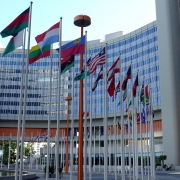
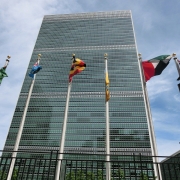
The UN headquarters is located in New York, USA, in which meetings are frequently conducted there. For instance, the Security Council conducts its regular annual session in New York.

What can we learn from this article?
Consider the following question:
– How far do you agree that the aims and principles of the Untied Nations were flawed?

Join our JC History Tuition and find out how to structure your essays and source-based case study answers effectively. We conduct online learning programmes to ensure that you have an exam-oriented way to study productively. You will receive summary notes and outlines for reference. Review your answers with the JC History Tutor to identify the areas of improvement.

The H2 and H1 History Tuition feature online discussion and writing practices to enhance your knowledge application skills. Get useful study notes and clarify your doubts on the subject with the tutor. You can also follow our Telegram Channel to get useful updates.

We have other JC tuition classes, such as JC Math Tuition and JC Chemistry Tuition. For Secondary Tuition, we provide Secondary English Tuition, Secondary Math tuition, Secondary Chemistry Tuition, Social Studies Tuition, Geography, History Tuition and Secondary Economics Tuition. For Primary Tuition, we have Primary English, Math and Science Tuition. Call 9658 5789 to find out more.
Why was the United Nations formed in 1945?

Topic of Study [For H1/H2 History Students]:
Paper 1: Safeguarding International Peace and Security 
Section B: Essay Writing
Theme III Chapter 1: Formation of the United Nations

Historical Context: The League of Nations
To understand why the United Nations was formed, it is imperative to examine the failures of the League of Nations. The US President Woodrow Wilson envisioned an international organisation that could resolve conflicts before war broke out. On 8 January 1918, President Wilson delivered his Fourteen Points speech that called for a stable world after World War I.

XIV. A general association of nations must be formed under specific covenants for the purpose of affording mutual guarantees of political independence and territorial integrity to great and small states alike.

Fourteen Points Speech, US President Woodrow Wilson, 8 January 1918.

Afterwards, Wilson negotiated with other Allied nations during the Paris Peace Conference in January 1919, particularly the United Kingdom, France and Italy (part of the “Big Four”). It concluded with the Treaty of Versailles that included the creation of the League of Nations. By 1920, 48 nations had joined the League of Nations.

THE HIGH CONTRACTING PARTIES, In order to promote international co-operation and to achieve international peace and security by the acceptance of obligations not to resort to war by the prescription of open, just and honourable relations between nations by the firm establishment of the understandings of international law as the actual rule of conduct among Governments, and by the maintenance of justice and a scrupulous respect for all treaty obligations in the dealings of organised peoples with one another Agree to this Covenant of the League of Nations.

The Covenant of the League of Nations, 28 April 1919.

The League of Nations comprised of three organs: The Council, Secretariat and the General Assembly. The Council comprised of four permanent members (Japan, Italy, France and Great Britain) and nine non-permanent members elected by the General Assembly every three years.

Inadequate global representation: Membership issues
However, Wilson’s idealistic dream of a world of “peace without victory” was not realised. Unexpectedly, USA did not join the League of Nations because Henry Lodge (headed the Senate Foreign Relations Committee) claimed that signing the treaty could coerce USA from acting against its own interests. Without USA, the League was frequently obstructed by political deadlocks.

Other notable powers were also excluded from the organisation, thus exposing its weaknesses in ensuring political commitment. Russia was not permitted to join the League till 1934 due to its ideological alignment with Communism.

Although Japan was a permanent member in the League Council, the League opposed the member nation’s invasion of Manchuria in September 1931. As such, Japan withdrew in 1933. Likewise, Italy withdrew in 1937 and Germany in 1933.

Lack of enforcement: Collective security principle
Also, member nations were unwilling to protect others even though the Covenant of the League of Nations specifically outlined the importance of collective security.

Any war or threat of war, whether immediately affecting any of the Members of the League or not, is hereby declared a matter of concern to the whole League, and the League shall take any action that may be deemed wise and effectual to safeguard the peace of nations. In case any such emergency should arise the Secretary General shall on the request of any Member of the League forthwith summon a meeting of the Council.

It is also declared to be the friendly right of each Member of the League to bring to the attention of the Assembly or of the Council any circumstance whatever affecting international relations which threatens to disturb international peace or the good understanding between nations upon which peace depends.

Article 11, The Covenant of the League of Nations, 28 April 1919.

For example, Russia attacked a port in Persia in 1920. As such, Persia requested the League to intervene, but was rejected on the grounds that Russia was not a member and would not recognise its jurisdiction.

Similarly, when Benito Mussolini of Italy invaded Abyssinia, the Abyssinian Emperor Haile Selassie appealed to the League for help, the organisation did not respond to the invasion. In fact, Great Britain and France made a secret agreement (Hoare-Laval Pact of 1935) with Italy to allow the dictator to conquer Abyssinia.

The prelude to World War Two: German Reparations
The Treaty required the provision of reparations by Germany, given its involvement in World War One. For instance, the Treaty required Germany to pay 269 billion gold marks (amounted to $37 billion). Also, Germany was demilitarised as its army was reduced to 100,000 men and weapons were confiscated.

As a result of the large reparations, Germany experienced a large fall in industrial output. General prices skyrocketed, giving rise to hyperinflation in the 1920s. Later, it paved the way for the Great Depression.

Economic problems then became a rallying point for Hitler and his Nazi Party occupied 230 out of 608 seats in the “Reichstag” (German parliament during the 1932 elections.

Failure of Disarmament: Hitler’s militarised Germany
After Hitler assumed control of the German government, he withdrew Germany from the League of Nations in 1933. Additionally, Germany underwent rearmament, which was an outright violation of the Treaty of Versailles.

In 1939, Germany invaded Czechoslovakia and Poland. As a result, Great Britain and France declared War on Germany, thus sparking off the World War Two.

Aftermath of the War: The formation of the United Nations
Following the disastrous conflict that engulfed the entire world, the United Nations was formed from the ashes of the League of Nations.

What can we learn from this article?
Consider the following question:
– How far do you agree that the lack of political representation was the main reason for the failure of the League of Nations [to be discussed in class]?

Join our JC History Tuition and learn how to consolidate your revision in preparation for the GEC A Level History examinations. Our online learning programme is suitable for JC students who are studying either H1 or H2 History. Receive summary notes and review your writing with the JC History Tutor to study productively.

The H2 and H1 History Tuition feature online discussion and writing practices to enhance your knowledge application skills. Get useful study notes and clarify your doubts on the subject with the tutor. You can also follow our Telegram Channel to get useful updates.

We have other JC tuition classes, such as JC Math Tuition and JC Chemistry Tuition. For Secondary Tuition, we provide Secondary English Tuition, Secondary Math tuition, Secondary Chemistry Tuition, Social Studies Tuition, Geography, History Tuition and Secondary Economics Tuition. For Primary Tuition, we have Primary English, Math and Science Tuition. Call 9658 5789 to find out more.