
Tag Archive for: h2 history tuition

Why did the Congo crisis happen?

Watch this illustrative video to grasp the historical significance of the Congo Crisis [Video by History House Productions]

Historical context: The decolonisation of Congo and the Mutiny
On 30 June 1960, Congo was no longer under the control of the former Belgian colonial power, achieving independence on this historic day. Less than a week later, Congolese forces in Force Publique mutinied against their Belgian commanders. The mutiny began in Thysville military base before spreading to the rest of the Congo Republic.

The mutineers made three demands: The removal of the Belgian commander in chief General Emil Janssens, the replacement of all Belgian officers by Congolese and raise in pay and rank.

Prime Minister Patrice Lumumba tried to end the mutiny but to no avail. He conducted a large-scale promotion, advancing every Congolese soldier by one grade.

The racial stratification that marked the pre-independence Congo clearly applied to the Force Publique. Whites controlled and composed the officer corps. The highest rank to which Africans could aspire was that of sergeant-major.

The Belgians, similar to other governing alien minorities, believed their rule best protected by compliant troops schooled in instant obedience, and by culturally homogenous commissioned officers sharing in full the assumptions and views of the dominant group. […]

The precipitating incident was General Emile Janssens’ proclamation to restive troops, “Before Independence = After Independence.”

An excerpt taken from the “Anatomy of Rebellion” by Claude E. Welch Jr. (1980).

Over time, violence spread to other parts of the Congo, prompting the departure of the Europeans. In response, the Belgian government deployed its troops to restore order and safeguard the well-being of its Belgian citizens. However, this move antagonised the Congolese central government as its leaders were not being consulted with.

Lumumba sent a plea to the United Nations in hopes of receiving operational support to pressure Belgium to withdraw its forces from the Congo.

On 14 July 1960, the United Nations Security Council passed Resolution 143, authorising the creation of a peacekeeping force known as Organisations des Nations Unies au Congo (ONUC, or UN Mission in the Congo).

The secession of Katanga
In addition to the problem of Belgian presence in the Congo, the nation had to contend with another serious issue: the secession of Katanga and South Kasai. On 11 July 1960, Kantaga declared its independence from the Congo Republic. A month later, the South Kasai province followed suit (9 August 1960).
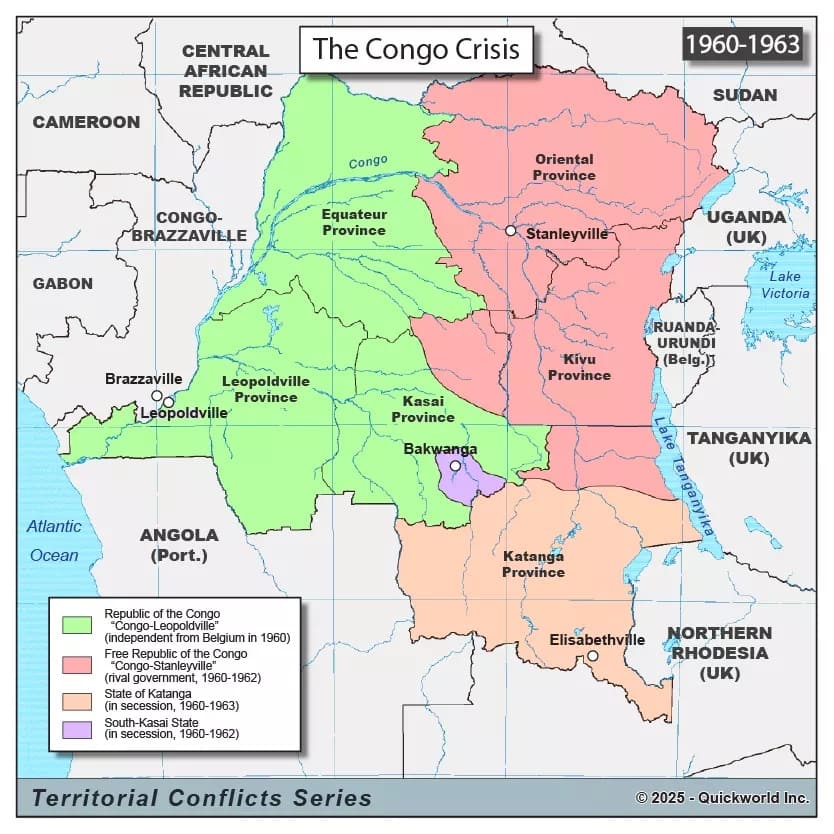
Examine the illustrative map of the Congo Republic during the Congo Crisis in 1960-1963.
Map of the Congo Republic during the Congo Crisis in 1960-1963, featuring the provincial states of Katanga and South Kasai that launched secessionist movements [Map by Quickworld Inc.].

The Katanga province was known for its mineral-rich status, featuring minerals like copper, cobalt and uranium. The Belgian mining company Union Minière du Haut-Katanga (UMHK) conducted its mining operations in Katanga, enjoying an annual turnover of about $200 million in USD in 1960.

Even before independence, Katanga experienced growing separatist tendencies. The mutiny incident become a trigger to reverse the opposing stance by the Europeans that saw secession of Katanga as an opportunity to protect Belgian investment.

The province’s president, Moïse Tshombe, sought help from Belgium and other Western states to oppose the spread of communism in central Africa. Also, Belgian troops deployed in Katanga helped to maintain order within the province.

With independence, the Europeans in Elisabethville saw a chance to stem the tide of African independence and supported the secessionist government of Moïse Tshombe. Belgium as well would lend Tshombe’s rebel government unofficial support, as Katanga continued its mission of remaining separate from Congo-Léopoldville.

The Belgians would secretly fund the mercenary army that gave ONUC a run for their money; the possibility of losing control of UMHK and the numerous lucrative mines scattered across the province was an unattractive option for European interests in Katanga.

An excerpt taken from “Congo” by Sean Rorison (2008).

The secession of South Kasai
Between 1960 and 1962, the leader of the MNC-K party Albert Kalonji fought to secede South Kasai from the Republic of the Congo. Like Katanga, South Kasai received assistance from Belgium.

More importantly, the secession in South Kasai was influenced by the ethnic tensions between the Baluba community (represented by Kalonji’s MNC-K) and the Bena Lulua.

In this phase, Kalonji became President of the South Kasai province and Joseph Ngalula assumed the role of Prime Minister. Kalonji’s rule was bolstered by the Luba chiefs. He established a strong narrative that the secession was justified because of ethnic persecution and the inability of the Congolese central government to safeguard the interests of the Baluba people.


Join our JC History Tuition to learn more about the Congo Crisis under the theme of Conflict and Cooperation. The H2 and H1 History Tuition feature online discussion and writing practices to enhance your knowledge application skills. Get useful study notes and clarify your doubts on the subject with the tutor. You can also follow our Telegram Channel to get useful updates.

We have other JC tuition classes, such as JC General Paper Tuition. For Secondary Tuition, we provide Secondary English Tuition, Secondary Math tuition, Secondary Chemistry Tuition, Social Studies Tuition, Geography, History Tuition and Secondary Economics Tuition. For Primary Tuition, we have Primary English, Math and Science Tuition. Call 8929 2422 to find out more.
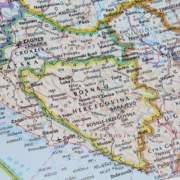
What Happened in the Siege of Sarajevo?

Examine the historical significance of the siege to understand its implications on the Bosnian War. [Video by Radio Free Europe/Radio Liberty]

Historical context: The Liberalisation of BiH
In February 1992, a ‘Referendum Weekend’ was scheduled as a requirement to recognise the independence of Bosnia and Herzegovina (BiH). While the Bosniaks and Croats supported the referendum, the Serbian Democratic Party (SDS) – led by Radovan Karadžić – boycotted said referendum. The SDS rallied the Bosnian Serbs to support its stance.

The SDS was against the referendum because it feared that independence of BiH would turn the Bosnian Serbs into a minority, violating their interests to remain part of Yugoslavia.

Of the three (communities), Bosniacs were the strongest proponents of a sovereign unitary state. While open to Bosnian sovereignty, Croats preferred cantonization. For their part, Serbs preferred for BiH to remain within the FRY; their second-best option revolved around the right of Serb areas to seek secession and rejoin the FRY. Not only did the three communities broadly disagree, Serbs considered the birth of independent BiH illegal because of the fact that the referendum on independence had gone ahead in spite of the boycott of one of the constituent people.

An excerpt taken from “When the Total is less than the Sum of the Parts: The Lessons of Bosnia and Herzegovina” by Marie-Joëlle Zaha.

Eventually, BiH declared independence from the Socialist Federal Republic of Yugoslavia (FRY) on 1 March 1992. On that same day, a shooting incident occurred.

The Baščaršija shooting incident
During a Bosnian Serb wedding procession in the Baščaršija district of Sarajevo, a Bosnian paramilitary member, Ramiz Delalic, killed the groom’s father and wounded an Orthodox priest. The attack sparked tensions over the display of Serbian national symbols during the wedding.

The Bosnian Serb community was outraged by the shooting, viewing the attack as a deliberate act of ethnic violence, giving rise to mobilisation and the setting up of barricades across Sarajevo. This incident highlighted the emergence of inter-ethnic violence.

According to a report by the CSCE, the blockade of the city ‘turned from spontaneous protests provoked by the wedding incident to an SDS-controlled effort’. Thus the barricades appeared not simply to ‘protect Serbs’ in the wake of the Baščaršija shooting but to demonstrate that the SDS would not accept lightly a declaration of independence in the event of a ‘yes’ vote.

An excerpt taken from “Reporting the Siege of Sarajevo” by Kenneth Morrison and Paul Lowe (2021).

The Siege
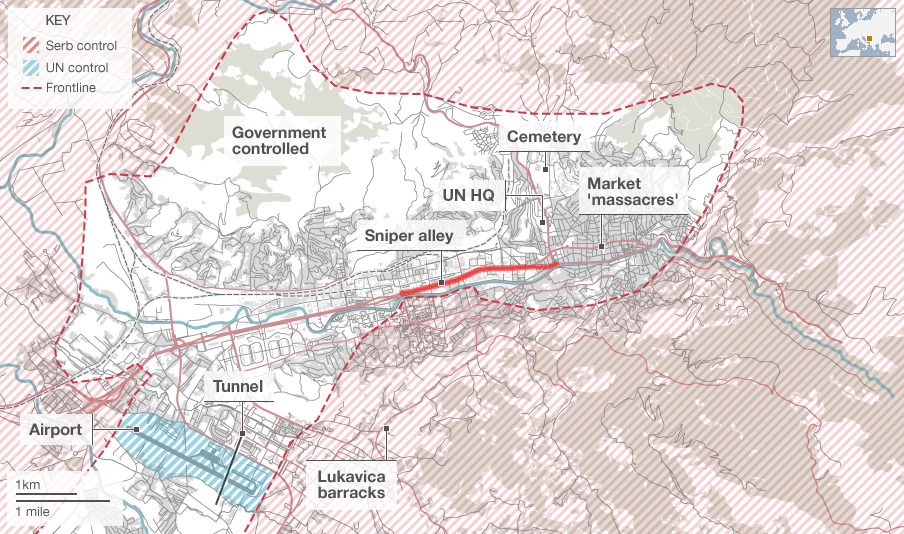
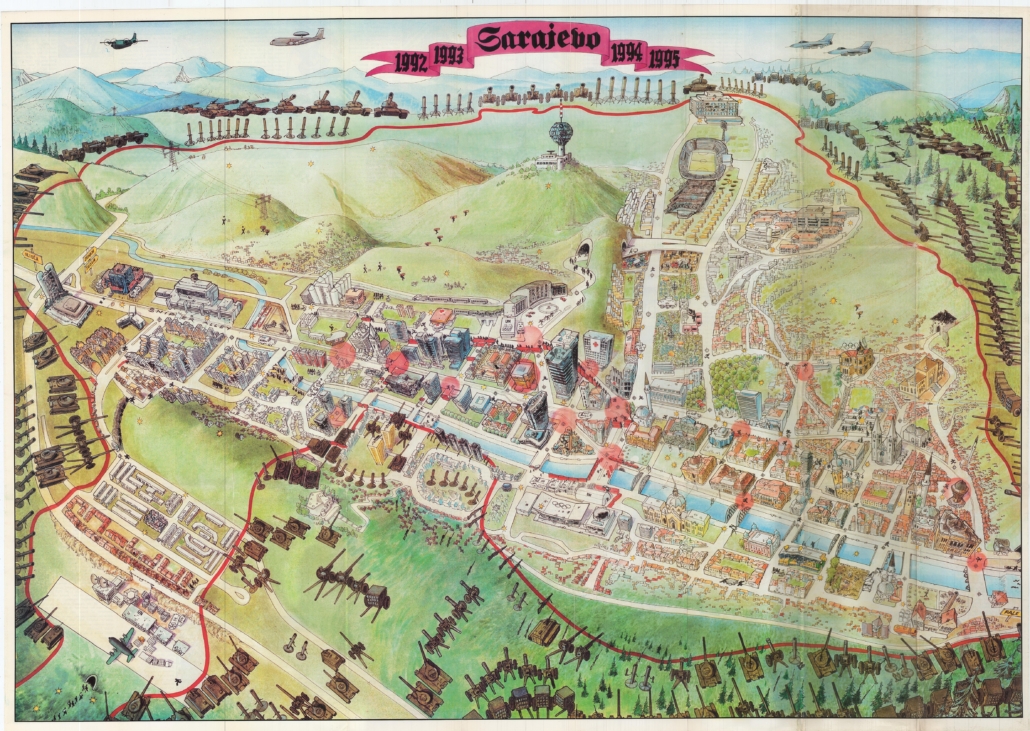
Bosnian Serb forces seized the capital city of Sarajevo, starting a four year-long brutal campaign that terrorised the citizens within. Sarajevo was under siege on 5 April 1992, trapping inside the city.

From May 1992 onwards, Serb forces attacked civilian areas of the city, resorting to shelling and sniping to wreck havoc on the population. Consequently, casualties mount. Between 1992 and 1995, more than 13,000 people had died, including 5,000 civilians. Much of the infrastructure in Sarajevo was damaged or destroyed, including religious buildings.

In early 1993, the Serb forces attacked the Cerska area in eastern BiH, forcing thousands of Bosniaks to flee to UN-declared ‘Safe Areas’.

A survival map provided by FAMA International that documented the Siege of Sarajevo and the disintegration of Yugoslavia.
A survival map provided by FAMA International that documented the Siege of Sarajevo and the disintegration of Yugoslavia [From David Rumsey Historical Map Collection]

Markale Market massacres
On 5 February 1994, the Army of Republika Srpska (VRS) fired a 120mm mortal shell into the Markale marketplace in Sarajevo, killing 68 people and injuring almost 200. On the same day, the Bosnian Serb leadership blamed ‘authorities in Sarajevo’ of planting explosives to influence the international community to blame the Serbs for the atrocities. A UNPROFOR report revealed that about 40 projectiles were fired from Serbian positions around Sarajevo on that day.

On 28 August 1995, five mortar shells hit the Markele market, killing 43 and injuring at least 70. A 1999 report to the UN concluded that the VRS was responsible for the second attack as well.

Conclusion
In December 1995, the Dayton Agreement was signed, ending the Bosnian War. On 29 February 1996, the Bosnian government declared the end of the siege.

A map that illustrates the front lies around Sarajevo, highlighting areas controlled by the United Nations as well as the Serbs. [Map by BBC]

Join our JC History Tuition to learn more about the Bosnian War under the theme of Conflict and Cooperation. The H2 and H1 History Tuition feature online discussion and writing practices to enhance your knowledge application skills. Get useful study notes and clarify your doubts on the subject with the tutor. You can also follow our Telegram Channel to get useful updates.

We have other JC tuition classes, such as JC General Paper Tuition. For Secondary Tuition, we provide Secondary English Tuition, Secondary Math tuition, Secondary Chemistry Tuition, Social Studies Tuition, Geography, History Tuition and Secondary Economics Tuition. For Primary Tuition, we have Primary English, Math and Science Tuition. Call 8929 2422 to find out more.
Why did the oil crisis happen?

The first oil shock of 1973
During the Yom Kippur War, Arab members of the Organisation of Petroleum Exporting Countries (OPEC) imposed an oil embargo to protest nations that backed Israel, particularly the United States (USA). This was in response to the US government’s attempt to resupply the Israeli military (see ‘Operation Nickel Grass‘).

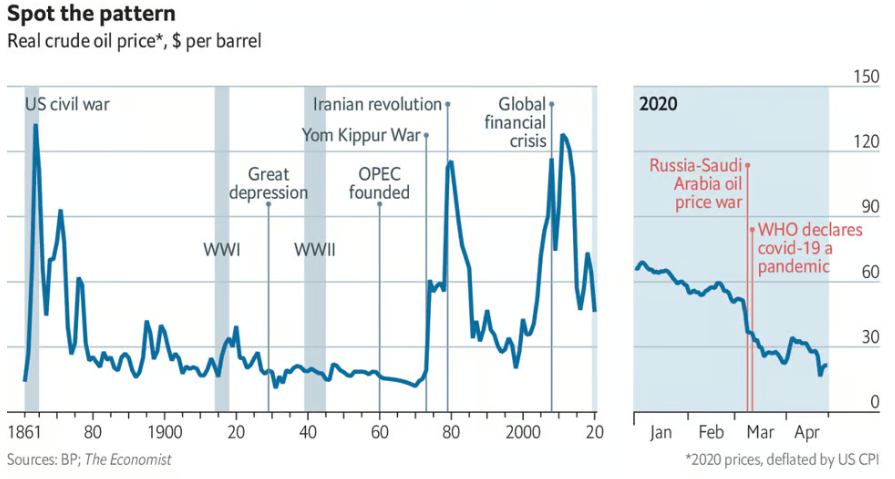
The embargo banned petroleum exports to the affected nations, destabilising the pricing system and straining oil-reliant economies. As a result of OPEC’s decision, crude oil price rose from $3 per barrel to $12 per barrel by 1974.

Crude oil prices provided by The Economist
Real crude oil prices between the 1800s and early 2020s.
Source: The Economist

In addition, the first oil shock coincided with the disastrous collapse of the Bretton Woods System, which saw the end of a gold-dollar fixed exchange rate system. The devaluation of the US dollar further exacerbated the adverse impacts of the energy crisis, plunging the USA and other Western industrialised nations into a recession.

The major oil firms, as well as their home governments, were not merely unprepared for the oil shock. They had become so accustomed to business as usual that they disregarded warning signs that the world was about to change, or change a lot faster than they realised. […] The combined effects of the embargo, oil price increases and the collapse of the concession system abruptly ended the post-World War II petroleum order.

Extracted from “Oil Shock: The 1973 Crisis and its Economic Legacy” (2016) by Elisabetta Bini, Federico Romero and Giuliano Garavini.

The second oil shock of 1979
The 1978 Iranian Revolution concluded with the end of Shah Mohammad Reza Pahlavi’s rule, ushering the rise of Ayatollah Khomeini’s Islamic Republic. As a result of said revolution, Iranian oil production fell by 4.8 million barrels per day, which occupied 7 percent of the global oil production by January 1979.

The political turmoil in Iran triggered widespread panic as oil-reliant nations began to hoard oil. The second oil crisis saw a surge of the price of global West Texas Intermediate (WTI) [benchmark for global oil price] from US$15 per barrel in September 1978 to US$40 per barrel in April 1980.

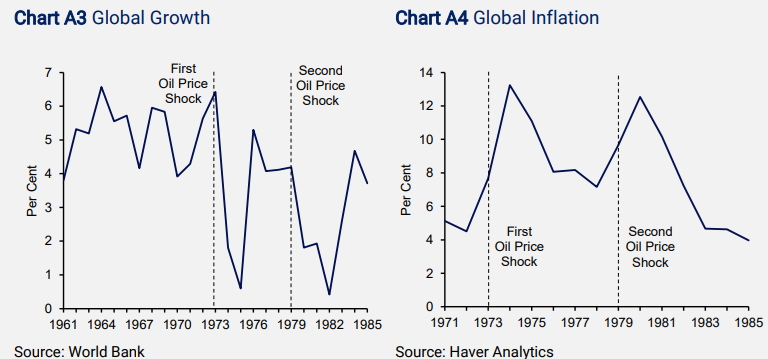
Fluctuations in global growth and inflation rates as a result of the twin oil shocks of the 1970s.
Source: Monetary Authority of Singapore (MAS)

The 1979 oil crisis had a profound impact on the global economy. It amplified the already existing inflationary pressures, a carryover from the monetary policies and commodity price shocks of the early to mid-1970s. The rising cost of energy rippled through the economy, increasing the price of everything from transportation and manufacturing to food production and heading. This led to stagflation – a combination of high inflation and slow economic growth – which plagued many Western economies during this period.

Extracted from “Inflation Surge Explained” by Gideon Fairchild (2025).

Join our JC History Tuition to learn more about the Global Economy. The H2 and H1 History Tuition feature online discussion and writing practices to enhance your knowledge application skills. Get useful study notes and clarify your doubts on the subject with the tutor. You can also follow our Telegram Channel to get useful updates.

Call 8929 2422 to find out more.

Why did Japan develop so quickly?

Johnson’s developmental state
In his study of Japan’s industrial policy, the American political scientist Chalmers Johnson explained that the state played a central role to conduct of inudstrialisation policies to achieve economic goals.

Between 1952 and 1971, Japan’s real Gross National Product (GNP) grew at an average rate of 9.6 percent per year, indicating a remarkable phase of rapid expansion.

According to Johnson, in Japan (and by extension in other East Asian developmental states) the role of the state conforms neither to the liberal Anglo-American tradition, under which the legitimate functions of governments are in theory restricted to administering and policing the overall legal framework within which individuals freely compete with one another, nor to the ideologically-based practice of planned socialist economies, in which state ownership and management of the means of production are seen as desirable ends in themselves. […]

In the wake of the neo-classical’ revival in economics, the policy prescriptions of the development establishment through the 1980s continued to encourage developing-country governments to withdraw from direct interference with market forces in their economies and to concentrate on ‘getting the basics right’ at the macroeconomic and infrastructural levels.

An excerpt taken from “Japanese Economic Development: Theory and Practice” by Penelope Francks.

Causes of the economic transformation of Japan
According to a study by Brookings Institution, there were four key factors identified as the cause of Japan’s phenomenal growth:

  • Capital accumulation
  • Knowledge advancement
  • Economies of scale
  • Labour supply expansion

In the case of capital accumulation, substantial investment was made that boosted Japan’s GNP. Gross private rose steadily from about 17 percent of GNP in the early 1950s to about 30 percent of GNP by the early 1970s. This private investment was financed by the high savings rate. Unlike the USA, in which private saving was a mere 15 percent of GNP in the 1960s, Japan’s savings rate was almost twice that of the USA.

In addition, the Ministry of International Trade and Industry (MITI) was established to oversee the industrial development of Japan. It replaced the role of its predecessor, the Ministry of Commerce, to involve past leading administrators to harness their knowledge and expertise to achieve growth targets.

Among industrial countries, Japan’s saving rate is unusually high and this has facilitated exceptionally large investment rates during the period of rapid economic growth as well as large current account surpluses.

[…] According to MITI’s inaugural minister, Inagaki Heitaro, its chief objective was to transform Japan into a leading world exporter. To accomplish this, it was first necessary to attain a substantial increase in industrial output, the rationalization of enterprise and an upgrading of technical standards.

An excerpt taken from “The Japanese Economy” by Victor Argy and Leslie Stein.

Join our JC History Tuition to learn more about the economic transformation of Japan and China under the theme of The Global Economy. The H2 and H1 History Tuition feature online discussion and writing practices to enhance your knowledge application skills. Get useful study notes and clarify your doubts on the subject with the tutor. You can also follow our Telegram Channel to get useful updates.

We have other JC tuition classes, such as JC Math Tuition and JC Chemistry Tuition. For Secondary Tuition, we provide Secondary English Tuition, Secondary Math tuition, Secondary Chemistry Tuition, Social Studies Tuition, Geography, History Tuition and Secondary Economics Tuition. For Primary Tuition, we have Primary English, Math and Science Tuition. Call 9658 5789 to find out more.

Revisited: What is the South China Sea dispute?

Learn more about the South China Sea dispute that engulfed the region in geopolitical instability. [Video by TRT World].

Significance of the South China Sea dispute: Resource-rich or strategic crossroads?
Countries have contested the legal ownership of numerous small islands, atolls and reefs. For China, the ‘nine-dash line’ was used as the basis to assert territorial claims, giving rise to opposition by other nations, like Vietnam and the Philippines.

In a protest note following a joint submission by Vietnam and Malaysia in 2009 to the UN body tasked with examining outer continental shelf claims, China declared it had “indisputable sovereignty over the islands in the South China Sea and the adjacent waters, and enjoys sovereign rights and jurisdiction over the relevant waters as well as the seabed and subsoil thereof”. Attached to the protest note was a map showing the nine-dash line, the first time China had officially lodged it with an international organisation.

[…] In 2013, for instance Gao Zhiguo, China’s judge on the International Tribunal on the Law of the Sea (ITLOS) – the dispute resolution mechanism established under UNCLOS – and Bing Bing Jia argued in an American law journal that the nine-dash line was “synonymous with a claim of sovereignty over the island groups that always belonged to China and with an additional Chinese claim of historical rights of fishing, navigation, and other marine activities (including the exploitation of resources, mineral or otherwise) on the islands and in the adjacent waters”.

An excerpt taken from “The South China Sea Dispute: Navigating Diplomatic and Strategic Tensions” by Cheng-Yi Lin, Ian Sotrey and Zhengyi Lin.

Notably, there is a general misperception that the South China Sea (SCS) is resource rich, guiding claimants to contest the disputed territories. Yet, estimates revealed that the South China Sea only occupies 10 percent of the global catch. Based on the 1982 United Nations Convention on the Law of the Sea (UNCLOS), most of the Spratly ‘Islands’ should instead be classified as ‘rocks’, and thus cannot meet UNCLOS criteria of an island that should generate a 200 nautical miles of Exclusive Economic Zone (EEZ). An island with EEZ can allow owners to harvest resources, like fish and hydrocarbons.

Beyond the viewpoint of the SCS being viewed as a resource-rich area, its value is also measured by its strategic geographical position. The sea routes that pass through the SCS are the shortest between the Pacific and Indian Oceans, enabling international trade to take place efficiently. As such, disputes that arise in the region could disrupt maritime commerce, undermining the growth of the global economy.

Resolution: Enter ASEAN
The likelihood of dispute resolution is low with regards to the SCS, given that none of the claimants have participated in bilateral talks. Even the option of legal arbitration was opposed by some parties, including China. Although the International Court of Justice (ICJ) can form a ruling on the sovereignty of the Spratly and Paracel Islands, not all claimants agreed to give consent for the Court to proceed.

Nonetheless, ASEAN has undertaken steps to manage the SCS dispute to safeguard regional security. In 1992, the Manila Declaration was issued, calling for all parties to resolve maritime disputes amicably and renounce the use of force. Even so, some claimants have expressed reluctance to acknowledge ASEAN’s efforts as seen by the outbreak of clashes like the Mischief Reef incident.

In late 1994, Chinese forces occupied Mischief Reef, an underwater atoll 135 miles off the southern coast of the Philippines’ western island of Palawan. […] Then, President Fidel Ramos quickly condemned the Chinese move and ordered the reinforcement of the Philippine garrison in the Spratlys. […] In 1995, [China] agreed to discuss the South China Sea dispute with the ASEAN in the ASEAN Regional Forum (ARF). After three years of negotiations, China and the ASEAN member states signed, in 2002, the Declaration of the Conduct of Parties in the South China Sea, which calls for the claimant states to resolve their territorial and jurisdictional disputes by peaceful means, and to refrain from occupying presently uninhabited atolls and shoals in the area.

An excerpt taken from “The South China Sea Maritime Dispute: Political, Legal and Regional Perspectives” by Christopher B. Roberts and Leszek Buszynski.

This 2002 Declaration of the Conduct of Parties in the South China Sea (DoC) was an agreement based on the 1992 Manila Declaration as well as the workshops hosted by Indonesia in the 1990s, signaling a breakthrough at dispute management. However, the DoC was non-binding and did not specify which activities contravened the self-restraint clause.

Fortunately, in July 2011, both ASEAN and China agreed on the establishment of guidelines to promote confidence building measures. Two years later, China agreed to commence talks on a binding Code of Conduct to manage the SCS dispute.


Join our JC History Tuition to learn more about ASEAN. The H2 and H1 History Tuition feature online discussion and writing practices to enhance your knowledge application skills. Get useful study notes and clarify your doubts on the subject with the tutor. You can also follow our Telegram Channel to get useful updates.

We have other JC tuition classes, such as JC Math Tuition and JC Chemistry Tuition. For Secondary Tuition, we provide Secondary English Tuition, Secondary Math tuition, Secondary Chemistry Tuition, Social Studies Tuition, Geography, History Tuition and Secondary Economics Tuition. For Primary Tuition, we have Primary English, Math and Science Tuition. Call 9658 5789 to find out more.

Why did the Jabidah massacre occur?

Topic of Study [For H2 History Students]:
Paper 2: Regional Conflicts and Co-operation
Source Based Case Study
Theme III Chapter 1: Inter-state tensions and co-operation [dispute over Sabah]

Learn more about the historical significance of the Jabidah Massacre on Corregidor Island in the Philippines [Video by Al Jazeera English].

Origins
In the late 1960s, the Marcos administration launched a clandestine operation to infiltrate and sabotage Sabah. In summary, the plan was to reclaim the disputed territory of Sabah from Malaysia.

Contesting claims
These developments can be traced to the territorial disputes between Malaysia and the Philippines. Sabah was endowed with abundant natural resources, producing billions of dollars worth of timber, platinum and gold.

The Philippine authorities asserted that the Sabah territory belonged to the Sultan of Sulu, who ruled from 1666 to 1946. After the Second World War, the British oversaw the decolonisation of Malaya and the creation of the Malaysian Federation that included Sabah (Borneo Territories).

However, the Philippine government insisted that the British ‘rented’ Sabah from the Sultan of Sulu and thus had no right to transfer land rights to Malaysia.

Though Britain included Sabah in the lands for the Malaysian Federation, the British had only been renting Sabah from the Sultan, and did not own it to give away, just as Spain did not own Sulu to sell it to America in 1898. The Sultan and most Moros felt as if someone were selling a horse that did not belong to them. How could the British give away the Sultan’s land, something he had owned 280 years?

An excerpt taken from “Nur Misuari: An Authorized Biography” by Tom Stern.

Given that the Sultan of Sulu, Jamalul Kiram II, was unable to pressure the British to reclaim Sabah from Malaysia, he turned to the Philippine government for help. The Sultan transferred his rights of the Sabah territory to Manila, in hopes that the latter would retake Sabah.

On 22 January 1962, Manila opposed a British note and insisted that it had rights to North Borneo. Diplomatic solutions were futile as seen by the outcome of the United Nations-supervised Referendum held on 13 September 1963. While a majority of the people in Sabah and Sarawak voted to join the Malaysian Federation, Manila and Jakarta opposed the results. Notably, this gave rise to the Konfrontasi.

Marcos’ Plan: Oplan Merdeka
In 1968, Philippine President Ferdinand Marcos hatched a plan to reclaim Sabah from Malaysia. He authorised the training of recruits, who were mostly Tausug people. By conspiring with their kin in Sabah, Marcos was certain that a civil unrest would ensue.

When that happens, the Sabah people would either secede from Malaysia or Manila would assume full control of the disputed territory.

The secret mission was codenamed ‘Operation Merdeka’ (‘Freedom’). These Muslim recruits were promised to be paid and be a part of the Philippine Armed Forces (AFP). As they were trained in an abandoned hospital, the recruits did not receive the payment as promised.

Eventually, the recruits realised that they were sent to invade Sabah and had to take the lives of their Muslim brethren in Malaysia. Horrified by this revelation, they submitted a petition to Marcos, seeking to expose the ill-treatment and deception by their superiors. Yet, their petition did not reach Marcos.

On 18 March 1968, more than 28 Muslim trainees were killed on Corregidor Island by soldiers of the AFP, sparking the rise of Muslim separatism that destabilised the Philippines ever since.

However, when members of the Armed Forces of the Philippines massacred more than 28 Moro Muslim recruits on March 18, 1968, on the Philippine island of Corregidor (called the Jabidah massacre), the sentiments of the Muslims in the Philippines led to the mobilization of the Muslim population, subsequently leading to the formation of the MNLF, led by the University of the Philippines professor Nur Misuari, that was able to challenge the Philippine state in terms of arms.

An excerpt taken from “The Slippery Slope to Genocide: Reducing Identity Conflicts and Preventing Mass Murder” by Mark Anstey, Paul Meerts and William Zartman.

Join our JC History Tuition to learn more about Inter-state Tensions. The H2 and H1 History Tuition feature online discussion and writing practices to enhance your knowledge application skills. Get useful study notes and clarify your doubts on the subject with the tutor. You can also follow our Telegram Channel to get useful updates.

We have other JC tuition classes, such as JC Math Tuition and JC Chemistry Tuition. For Secondary Tuition, we provide Secondary English Tuition, Secondary Math tuition, Secondary Chemistry Tuition, Social Studies Tuition, Geography, History Tuition and Secondary Economics Tuition. For Primary Tuition, we have Primary English, Math and Science Tuition. Call 9658 5789 to find out more.

What was the Tet Offensive?

Topic of Study [For H2 History Students]: 
Paper 1: Understanding the Cold War (1945-1991)
Section A: Source-based Case Study
Theme I Chapter 2: A World Divided by the Cold War – Manifestations of the global Cold War: Vietnam War (1959-75)

Topic of Study [For H1 History Students]:
Essay Questions
Theme III Chapter 1: The Cold War and Southeast Asia (1945-1991): Factors shaping the Second Indochina War (1959–1975)

Examine the historical significance of the Tet Offensive in 1968 that shaped the developments of the Second Indochina War [Video by History]

Historical Context: Ho Chi Minh’s Plan
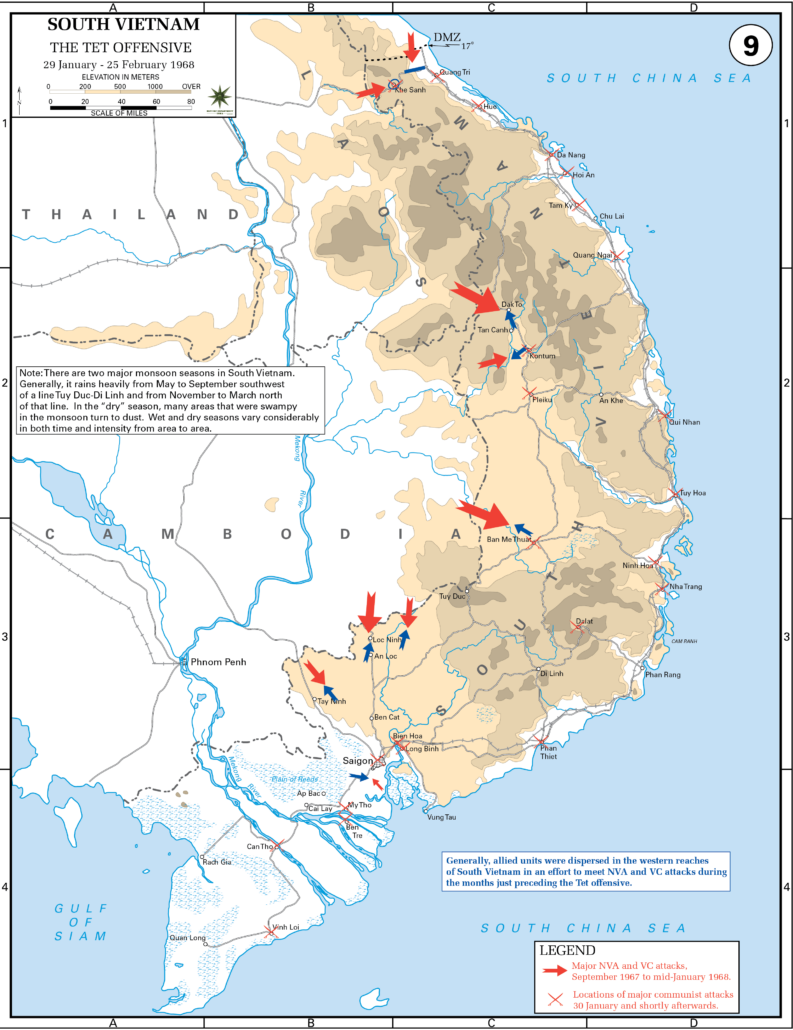
On 30-31 January 1968, the North Vietnamese forces and the Viet Cong launched a coordinated military campaign in South Vietnam. It coincided with the Vietnamese New Year, known as the Tet, in which many South Vietnamese soldiers were preoccupied with this celebration.

Ho Chi Minh formulated this plan to carry out the Tet Offensive to achieve two main goals:

  • To sow discord between the United States and South Vietnamese forces.
  • To cause an internal collapse of authority within South Vietnam and spark unrest to oppose the Saigon regime.

During the Battle of Hue, the Viet Cong overran the city and took control of Hue, claiming the lives of thousands of inhabitants within. The Allied troops had to take nearly a month to regain control of Hue. In doing so, the USA had incurred rising casualties, which was a problem concealed by the government.

The Viet Cong fighters piled into a truck and a taxicab and drove to their target. Just before 3 A.M., as they drove past the night gate, the Viet Cong opened fire on the two American guards stationed there. […] Shortly after 9 A.M., the embassy was officially declared clear of all enemy fighters. General William Westmoreland, commander of all U.S. forces in Vietnam, strode onto the embassy grounds in clean, pressed uniform. Westmoreland told reporters that the attack on the embassy had been part of a wider Viet Cong assault across Vietnam. He complained that the Viet Cong had broken a holiday truce to stage these attacks.

An excerpt taken from “The Tet Offensive: Turning Point of the Vietnam War” by Dale Anderson.

Although the campaign targeted more than 100 cities and towns, including the southern capital Saigon, it was a catastrophic military disaster for the communists. As many as 50,000 communist troops died in their attempt to gain control of South Vietnam.

Vietnam War - Tet Offensive - West Point 2
Map illustration of the Tet Offensive during the Vietnam War.
Illustration provided by West Point, US Military Academy.

Unintended Consequences: The Quagmire
Nonetheless, the repercussions of the Tet Offensive on the United States were serious. As the Johnson administration had repeatedly reassured the American public that a swift and decisive victory was possible in Vietnam, the Tet Offensive had raised doubts on this promise.

The American journalist Walter Cronkite had exposed the deception of the Johnson administration in a provoking broadcast. This revelation was made after his personal trip to Hue in Vietnam, in which the most intense urban warfare took place during the war.

We have been too often disappointed by the optimism of the American leaders, both in Vietnam and Washington, to have faith any longer in the silver linings they find in the darkest clouds. […]

To say that we are closer to victory today is to believe, in the face of the evidence, the optimists who have been wrong in the past. To suggest we are on the edge of defeat is to yield to unreasonable pessimism. To say that we are mired in stalemate seems the only realistic, yet unsatisfactory, conclusion. On the off chance that military and political analysts are right, in the next few months we must test the enemy’s intentions, in case this is indeed his last big gasp before negotiations. But it is increasingly clear to this reporter that the only rational way out then will be to negotiate, not as victors, but as an honorable people who lived up to their pledge to defend democracy, and did the best they could.

An excerpt taken from Walter Cronkite’s “We are mired in stalemate” broadcast, 27 February 1968.

As a result, public sentiments became to shift in favour of US withdrawal from Vietnam, given that the people realised that a victory in Vietnam was unlikely, as outlined by Cronkite’s broadcast. Faced with mounting popular pressure, Johnson announced on 31 March 1968 that he would not seek a second term as president of the United States. His successor, Richard Nixon, then proceed with the policy of “Vietnamisation“, which led to a new phase of the US role in the Second Indochina War.


Join our JC History Tuition to learn more about the Vietnam War, Korean War and Cuban Missile Crisis. The H2 and H1 History Tuition feature online discussion and writing practices to enhance your knowledge application skills. Get useful study notes and clarify your doubts on the subject with the tutor. You can also follow our Telegram Channel to get useful updates.

We have other JC tuition classes, such as JC Math Tuition and JC Chemistry Tuition. For Secondary Tuition, we provide Secondary English Tuition, Secondary Math tuition, Secondary Chemistry Tuition, Social Studies Tuition, Geography, History Tuition and Secondary Economics Tuition. For Primary Tuition, we have Primary English, Math and Science Tuition. Call 9658 5789 to find out more.

What is the purpose of the ASEAN Free Trade Area?

Learn more about the ASEAN Free Trade Area that was established in 1992 [Video by NLB Singapore].

Renewed vigour: The origins of the AFTA
The end of the Cold War marked a turning point for ASEAN. With the re-integration of Europe and the formation of the European Union (EU), coupled with the formalisation of the North American Free Trade Area (NAFTA), ASEAN-6 saw a pressing need to step up its efforts to compete with these regional trading blocs.

The recent initial agreement to create a North American Free Trade Area (NAFTA) has been a cause of concern in ASEAN. The possibility of trade diversion resulting from closure of the North American market has made ASEAN more cognizant of the need for a ballast to overcome the loss of some of the trade with North America. Similarly, growing fears about the creation of a European Economic Area (EEA) have been voiced within ASEAN.

An excerpt taken from “AFTA: The Way Ahead” by Seiji F Naya and Pearl Imada Iboshi.

During the Fourth ASEAN Summit held in Singapore on 27-29 January 1992, the six ASEAN member states signed the Singapore Declaration, which outlined the unified aim of establishing the ASEAN Free Trade Area (AFTA).

Functions of the AFTA & ASEAN Enlargement
The creation of the AFTA was achieved through the Common Effective Preferential Tariff (CEPT) Scheme, in which tariff rates for manufactured and processed agricultural products had to be reduced to 0-5 percent within a fifteen-year time-frame. In particular, the Declaration identified fifteen groups of products to be subjected to the CEPT Scheme, such as cement, fertiliser, electronics and textiles.

For the newer members (Cambodia, Myanmar, Laos and Vietnam, or CMLV), they were given a longer timeframe to implement tariff reductions.

During the 26th ASEAN Economic Ministers’ Meeting on 22-23 September 1994, the timeframe was reduced from fifteen years to ten years, so as to realise the AFTA goals by 2003. In addition, the CEPT scheme was to be applied to all unprocessed agricultural products.

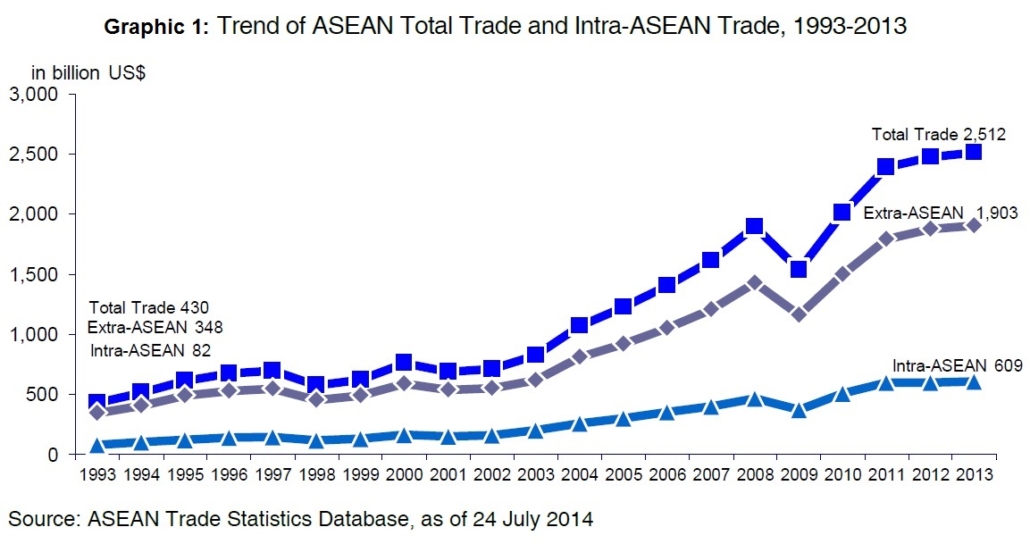
As a result, the value of intra-ASEAN trade rose from less than US$44 billion in 1993 to more than US$85 billion in 1997, suggesting the significant contributions of the AFTA.

Trend of ASEAN Total Trade and Intra-ASEAN Trade (ASEAN Trade Statistics Database)
Source: Thomson Reuters

Building a resilient regional market: The post-Asian Financial Crisis phase
In spite of the disastrous Asian Financial Crisis (July 1997), the regional association remained undeterred by the economic shocks. During the 6th ASEAN Summit on 15-16 December 1998, the ASEAN-6 members agreed to bring forward the deadline of the AFTA implementation from 2003 to 2002 for items in the Inclusion List. This was known as the Hanoi Declaration.

In 1997, the international financial crisis struck Southeast Asia hard. Immediately, the usual instant commentaries predicted that, as a result of the crisis, ASEAN countries would retreat into isolation, that ASEAN would fall into disarray, that AFTA was dead. Such speculations, some of it evidently arising from herd instinct, were made in defiance of logic and without waiting for the facts to unfold.

[…] The fact was that, in 1998, at their summit in Ha Noi, the ASEAN leaders again advanced the completion date of AFTA, this time by one year, to the beginning of 2002 for the six original signatories to the AFTA Agreement, with the later signatories given a few more years to adjust to regional free trade.

An excerpt taken from a statement by Rodolfo C. Severino, Secretary-General of ASEAN, at the workshop on ‘Beyond AFTA: Facing the Challenge of Closer Economic Integration‘, 2 October 2000.

Join our JC History Tuition to learn more about the ASEAN. The H2 and H1 History Tuition feature online discussion and writing practices to enhance your knowledge application skills. Get useful study notes and clarify your doubts on the subject with the tutor. You can also follow our Telegram Channel to get useful updates.

We have other JC tuition classes, such as JC Math Tuition and JC Chemistry Tuition. For Secondary Tuition, we provide Secondary English Tuition, Secondary Math tuition, Secondary Chemistry Tuition, Social Studies Tuition, Geography, History Tuition and Secondary Economics Tuition. For Primary Tuition, we have Primary English, Math and Science Tuition. Call 9658 5789 to find out more.

What is the relationship between Vietnam and the ASEAN countries?

The Cold War lens: Consequences of the Second Indochina War
During the Vietnam War, the Paris Peace Accords were signed on 27 January 1973, which provided an official basis for the full withdrawal of the American troops from South Vietnam. As part of the 1969 Nixon Doctrine, the reduced commitment of the USA in the Asia-Pacific meant that there was a corresponding decline in its military presence in Thailand and the Philippines.

However, Hanoi held deep suspicions of the US motives of manipulating ASEAN as a Cold War instrument in the region, which conflicted with ASEAN’s neutral position as declared under its 1971 Zone of Peace, Freedom and Neutrality (ZOPFAN). Even after the Paris Agreement, some ASEAN member nations maintained relations with the Provisional Revolutionary Government of the Republic of South Vietnam (PRG), which Hanoi interpreted as a confirmation of its suspicions.

Besides, tensions were high as Thailand turned to China for help with its looming border security threat. In February 1979, Vietnam and China clashed in a short military confrontation, which could be seen as an extension of the Sino-Soviet split.

In Hanoi’s view, ASEAN is both an offshoot and a disguise of the US-led SEATO that serve the US interests and this explained the “insincerity of ASEAN proposal of neutrality”. Thus, in Hanoi’s future relations with ASEAN the opposition aspect would be greater than the cooperation aspect. Moreover, cooperation should serve to drive a wedge among ASEAN member states, that is “to exploit contradictions among those in the opposite side”, which had become one of the guiding principles of the Vietnamese foreign policy with respect to ASEAN.

An excerpt taken from “Flying Blind: Vietnam’s Decision to Join ASEAN” by Nguyen Vu Tung.

After the fall of Saigon, Deputy Foreign Minister Phan Hien raised a ‘four-point position’ in July 1976, which antagonised ASEAN nations. For instance, one of the four points stated “Regional states should develop cooperation among themselves in accordance with the specific conditions of each state and in the interest of genuine independence, peace, and neutrality in Southeast Asia, thus contributing to the cause of world peace.”

At this stage, Vietnam refused to recognise ZOPFAN and join ASEAN.

Mounting Tensions: The Third Indochina War
In December 1978, Vietnamese troops invaded Kampuchea, causing the outbreak of the Third Indochina War that alarmed ASEAN. On 7 January 1979, a pro-Vietnamese government known as the People’s Republic of Kampuchea (PRK) was formed. As a result, ASEAN-Vietnam relations soured.

In response to this gross violation of national sovereignty, ASEAN made repeated joint statements to call for the immediate withdrawal of foreign troops from Kampuchea and the recognition of self-determination. In particular, ASEAN took the lead in calling for the formation of the Coalition Government of Democratic Kampuchea (CGDK) that comprised of three anti-Phnom Penh factions in June 1982.

The Vietnam Ministry of Foreign Affairs (MOFA) retaliated by declaring ASEAN countries as “hostile to Vietnam” from 1979 onwards.

As far as ASEAN is concerned, Vietnam is pursuing tactics that deliberately evade and obscure the central fact of the issue: Vietnamese armed occupation of Kampuchea. ASEAN rejects that implicit bilateralization of the problem in Vietnam’s effort to define it as a Thai-Kampuchean border dispute. Moreover, ASEAN has been unwilling to see the Vietnamese military presence in Kampuchea be submerged in a diffuse general agenda on problems of peace and stability in Southeast Asia that might include such topics as US basis in the Philippines. […] Furthermore, Vietnamese initiated bilateral official contacts with ASEAN states appear to be manipulated in a manner calculated to crack ASEAN’s external solidarity by driving a political wedge between the members.

An excerpt taken from “Southeast Asia Divided: The Asean-Indochina Crisis” by Donald E. Weatherbee.

A new age: Post-Cold War transition
On 23 October 1991, the Paris Peace Agreements were signed, marking an official end of the Third Indochina War. The late 1980s marked a turning point for ASEAN-Vietnam relations. Vietnam launched its Doi Moi reform policy to undergo political and economic transformation in both domestic and international fronts. In terms of foreign policy, Vietnam sought to strengthen diplomatic relations with ASEAN member nations in spite of its past transgressions.

The period 1992-1995, spanning an interview from the collapse of the Soviet Union and normalization of relations with China through full membership in ASEAN and diplomatic recognition by the United States, was also a time of significant change in elite views of the nature of the international system, and its implications for Vietnam.

[…] The abrupt end of the Cold War and the collapse of Vietnam’s main supporter certainly qualifies as a major “external shock”, and it had been preceded by the economic shock of the 1980s which, by undermining the old ways of conceiving socialism, had cleared the way for new thinking in the external sphere.

An excerpt taken from “Changing Worlds: Vietnam’s Transition from Cold War to Globalization” by David W. P. Elliott.

In 1992, Vietnam joined the Treaty of Amity and Cooperation (TAC). On 28 July 1995, Vietnam joined ASEAN as a full member. Subsequently, Vietnam participated in the ASEAN Free Trade (AFTA), facilitating regional economic integration that made ASEAN flourish economically.


Join our JC History Tuition to learn more about the ASEAN. The H2 and H1 History Tuition feature online discussion and writing practices to enhance your knowledge application skills. Get useful study notes and clarify your doubts on the subject with the tutor. You can also follow our Telegram Channel to get useful updates.

We have other JC tuition classes, such as JC Math Tuition and JC Chemistry Tuition. For Secondary Tuition, we provide Secondary English Tuition, Secondary Math tuition, Secondary Chemistry Tuition, Social Studies Tuition, Geography, History Tuition and Secondary Economics Tuition. For Primary Tuition, we have Primary English, Math and Science Tuition. Call 9658 5789 to find out more.

What are Special Economic Zones of China?

Learn more about the Special Economic Zones like Shenzhen, Zhuhai and Xiamen [Video by CGTN].

Vanguards and forerunners: Introducing the SEZs
Between 18 and 22 December 1978, the 3rd Plenary Session of the 11th Central Committee of the Chinese Communist Party was held. During this session, the Chinese government began its pivotal journey in undergoing ambitious economic reforms to correct the errors of the Maoist economic system.

As part of Deng Xiaoping‘s economic reform that began in 1979, the government designated four Special Economic Zones (SEZs): Shenzhen (深圳), Zhuhai (珠海), Shantou (汕头) and Xiamen (厦门).

These SEZs were economically open areas that promoted technology transfer, foreign investment and export activities. China sought to harness its large pool of labour to produce labour-intensive goods for export. By doing so, it can accumulate foreign exchange earnings to meet the demands of its capital-starving economy.

In addition, SEZs were important in accessing foreign technology to stimulate growth. With the influx of foreign direct investment, these SEZs could then utilise foreign technology and production techniques to enhance the processes of domestic enterprises.

The designation of the above-mentioned four SEZs was intentional. Their locations were identified given their proximity to external economies, namely Taiwan, Macau and Hong Kong. There were contemplations of using these SEZs to integrate with these external economies that may eventually lead to ‘political reunification’. Besides, there was limited capital investment, thus the open-door policy could not be implemented nation-wide from the outset.

Case Study: Shenzhen
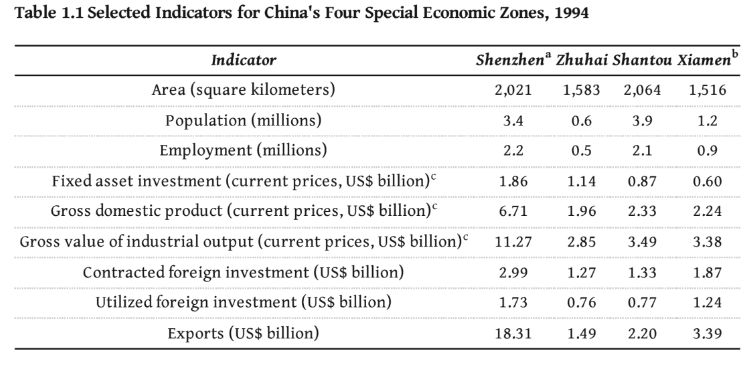
Among the four SEZs, Shenzhen became the largest and most successful zone (see Table 1.1). Its success could be attributed to its unique geographic location, given that it functioned as a channel between the mainland and Hong Kong. Furthermore, Shenzhen has abundant land resources that gave it much potential for industrial development.

Source: Pioneering Economic Reform in China’s Special Economic Zones: The Promotion of Foreign Investment and Technology Transfer in Shenzhen (Weiping Wu, 1999)

Three major work conferences were held to finetune the development strategies for Shenzhen (1981, 1985 and 1990). For example, the 1990 work conference emphasised the importance of the SEZs as the core of the coastal development strategy as well as the generation of foreign exchange. At that time, the central government directly supervised policymaking and appointments for Shenzhen.

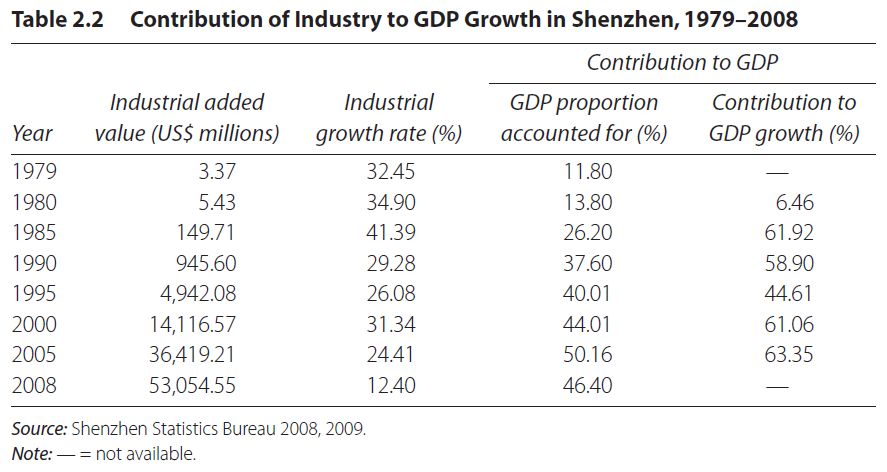
Since the 1990s, Shenzhen’s industrial growth contributed to half of the growth in Gross Domestic Product. In 1994, contribution by the industry was 43 percent compared 11.8 percent in 1979 (see Table 2.2).

Source: Building Engines for Growth and Competitiveness in China: Experience with Special Economic Zones and Industrial Clusters (Directions in Development – Countries and Regions) by Douglas Zhihua Zeng.

In fact, Shenzhen has become one of the political battlefields between the reform and conservative factions in the central government. Its success or failure, at least in the early 1980s, would determine the fate of the reform. The SEZ promoters hoped to use Shenzhen not only to promote foreign investment and technology transfer, but also to learn how to adopt selected features of a market system into the socialist reform. Shenzhen, as well as other SEZs, represented in miniature the very essence of the new reforms.

An excerpt taken from “Pioneering Economic Reform in China’s Special Economic Zones: The Promotion of Foreign Investment and Technology Transfer in Shenzhen” by Weiping Wu.

In 1984, fourteen more coastal cities were designed as SEZs, such as Yantai (烟台), Tianjin (天津) and Shanghai (上海). These SEZs prioritised the promotion of foreign investment.


Join our JC History Tuition to learn more about the economic transformation of China and Japan under the theme of The Global Economy. The H2 and H1 History Tuition feature online discussion and writing practices to enhance your knowledge application skills. Get useful study notes and clarify your doubts on the subject with the tutor. You can also follow our Telegram Channel to get useful updates.

We have other JC tuition classes, such as JC Math Tuition and JC Chemistry Tuition. For Secondary Tuition, we provide Secondary English Tuition, Secondary Math tuition, Secondary Chemistry Tuition, Social Studies Tuition, Geography, History Tuition and Secondary Economics Tuition. For Primary Tuition, we have Primary English, Math and Science Tuition. Call 9658 5789 to find out more.