

Tag Archive for: jc history tuition

Why is Hyundai so successful?

Topic of Study [For H2 History Students]: 
Paper 1: Understanding the Global Economy (1945-2000)
Section B: Essay Writing
Theme II Chapter 3: Rise of Asian Tigers from 1970s to 1990s [South Korea and Taiwan]

Humble beginnings
Chung Ju-yung was born in poverty-stricken family that relied on farming to make a living. After the end of the Second World War, Chung established the Hyundai Engineering and Construction Company (HECC). The HECC began its operations as a civil engineering subcontractor that provided maintenance and repair work in the 1950s.

A turn of events: The Korean War
During the Korean War, the HECC took on projects by the United States Army, enabling it to expand into one of the leading construction companies in South Korea. Furthermore, Chung worked with the Rhee administration to secure construction projects for the development of local infrastructure.

When General Park Chung-hee took over in the 1960s, Chung continued to obtain contracts to entrench Hyundai’s market dominance, such as the development of the Gyeongbu Expressway. Externally, the HECC helped to develop infrastructure in Vietnam and the Middle East, which proved to be a fortuitous time for diversification.

The success of HECC in the construction industry, aided by support from the Park military government, enabled Hyundai to diversify into the automobile and shipbuilding industries and establish the Hyundai Motor Company and Hyundai Heavy Industries in 1967 and 1974.

… This aggressive entry into the Middle East market had important implications for the growth of both HECC and the Hyundai Business Group. It enabled HECC to become an international construction company no longer dependent on its domestic market. Moreover, the rapid expansion of its heavy industrial construction projects created a large internal demand for materials, enabling Hyundai to strengthen its monopoly position in the domestic construction market during the 1970s.

An excerpt from “The Chaebol and Labour in Korea: The Development of Management Strategy in Hyundai” by Seung-Ho Kwon and Michael O’Donnell.

Enter Hyundai Motor
Initially, the Hyundai Motor Company (HMC) forged a joint agreement with the US-based Ford Motor Company. Yet, the lack of consensus over managerial and marketing issues led to the termination of the partnership in the early 1970s. In 1976, HMC developed its first car, the Hyundai Pony, in 1976.

https://www.youtube.com/watch?v=cObQ1LhRCKg
The Hyundai Pony as described by George Turnbull [Video by ThamesTV]

The Hyundai pony was developed with the support of the Mitsubishi Motor Company that sought to expand its market access beyond the shores of Japan. Hyundai was granted a technical licensing agreement, which enabled it to develop its very own nameplate cars.

Additionally, Chung roped in George Turnbull, who was formerly the president of the British Leland – an automotive company. Turnbull assumed the role as vice president of the HMC. In two years, Turnbull oversaw the development of the car production facilities in Ulsan.

By 1976, the new plant was completed and the first cars began rolling off the assembly line. Chung named the new model the Pony, a familiar name to many Koreans who were brought up on American Western movies. The Pony was a 1.2 liter rear-wheel-drive subcompact of modest quality. No market research had been done. Chung and his company had simply designed and built the car they thought the Korean people should have. President Park guaranteed the financing; Hyundai built it. It was Korea’s first national car.

An excerpt from “Made in Korea: Chung Ju Yung and the Rise of Hyundai” by Richard M. Steers.

From mid-1970s onwards, the HMC moved beyond the limited domestic market to the export markets. Alongside other similar automakers like Daewoo and Kia, the HMC increased export production in the 1980s. Hyundai Motors set up a production facility in 1985, which had an annual capacity of 300,000 units. By the mid-1980s, more than half of the total car production was exported, enabling the South Korean economy to benefit from continued current account surpluses by 1989.

What can we learn from this article?
Consider the following question:
– Assess the reasons for the rise of Hyundai from the 1970s to 1980s.

Join our JC History Tuition to learn more about chaebols and other factors relating to the Asian Tigers. The H2 and H1 History Tuition feature online discussion and writing practices to enhance your knowledge application skills. Get useful study notes and clarify your doubts on the subject with the tutor. You can also follow our Telegram Channel to get useful updates.

We have other JC tuition classes, such as JC Math Tuition and JC Chemistry Tuition. For Secondary Tuition, we provide Secondary English Tuition, Secondary Math tuition, Secondary Chemistry Tuition, Social Studies Tuition, Geography, History Tuition and Secondary Economics Tuition. For Primary Tuition, we have Primary English, Math and Science Tuition. Call 9658 5789 to find out more.

How to study A Level History effectively during holidays?

Make every day count
In view of the upcoming March holiday week, it is crucial for JC students to take stock of their progress. For JC 1 students, it may seem like a daunting task to approach the A Level History subject, given the vast depth of historical information. As for JC 2 students, most are at the stage of consolidating their knowledge of new topics, such as the Global Economy (H2 History) and Superpower Relations with China (H1 History). All in all, the one week break is an important phase to re-assess the situation by identifying any study issues and resolving them in a systematic and productive way.

1. Organise your materials
Given the hectic schedule of JC students, it is typical for some to pile up study notes, question papers and marked scripts in a disorganised fashion. However, the problem of misplacing learning materials can be costly. It may even be a frustrating experience to search high and low for relevant documents to revise specific topics.

To avert such an unpleasant situation, you should put in the time to arrange your materials. One cost-effective method is to use separate files or folders to organise the papers. Alternatively, you can switch to a more eco-friendly way for easy access. Setup a folder in your digital device, such as a laptop or tablet, then keep your History materials inside.

2. Revise content productively
A common error that some JC students make while studying A Level History is to spend considerable time on reading to grasp the historical developments covered in different topics. Although some may find it useful to know the intricacies of key events, like the origins of the Truman Doctrine that caused the start of the Cold War, they will encounter difficulties in expressing their ideas clearly to answer essay questions and source based case studies.

The crux of the issue lies with the way A Level History questions are set. These questions do not test your ability to regurgitate factual information, like the functions of the United Nations Security Council. Instead, the examiners are assessing your capability in analysing past events and deriving cohesive arguments. Therefore, it is imperative for students to recognise this concern and make relevant adjustments to their study methods when doing revision.

“It’s not how we make mistakes, but how we correct them that defines us.”

— Rachel Wolchin

How our JC History Tuition prepares you for the examination?
If you are unsure of the appropriate responses to address the above-mentioned issues, our JC History Tuition programme will assist you in handling them. JC 1 and JC 2 students who are taking either H2 History or H1 History will receive concise study notes to revise for various topics. These learning materials have been refined to match the key perspectives that are commonly featured in a wide range of examination questions.

Additionally, our regular tuition covers thematic content discussion to guide you through the process of studying the topics meaningfully. You will learn how to use the notes to remember key factual information in a systematic way, such that you will grasp its application in different forms.

As you prepare for your Common Tests, Block Tests or even the major assessments like the JC 1 Promotional examinations and JC 2 Preliminary examinations, our JC History Tuition programme features free writing practices. These practices are held fortnightly to get you accustomed to the time constraints. Also, your practices are marked and reviewed by the tutor.

The H2 and H1 History Tuition feature online discussion and writing practices to enhance your knowledge application skills. Get useful study notes and clarify your doubts on the subject with the tutor. You can also follow our Telegram Channel to get useful updates.

We have other JC tuition classes, such as JC Math Tuition and JC Chemistry Tuition. For Secondary Tuition, we provide Secondary English Tuition, Secondary Math tuition, Secondary Chemistry Tuition, Social Studies Tuition, Geography, History Tuition and Secondary Economics Tuition. For Primary Tuition, we have Primary English, Math and Science Tuition. Call 9658 5789 to find out more.

How effective is the International Court of Justice?

Topic of Study [For H2 History Students]:
Paper 1: Safeguarding International Peace and Security 
Section B: Essay Writing
Theme III Chapter 2: Political Effectiveness of the UN in maintaining international peace and security

All bark and no bite?
Ever since the formation of the International Court of Justice on 26 June 1945, it has addressed a variety of cases. It is involved either in the provision of advisory opinion on legal matters or arbitration.

Yet, there is increased skepticism towards the Court’s efficacy in ensuring member nations adhere to the international law.

For instance, the Court failed to enforce its ruling against the United States in 1986. Although it ruled in favour of Nicaragua, the United States refused to comply, thus diminishing the confidence of other members in submitting their cases to the Court.

The United States refused to participate in the merits phase of the case, considering the Court’s ruling ‘clearly and manifestly erroneous as to both fact and law’.

…The United States’ reaction culminated with a notice of termination of its declaration accepting compulsory jurisdiction of the Court on 7 October 1985. Given the support that the United States had traditionally given to the Court, its withdrawal from the Optional Clause System was a cause for much regret and concern.

An excerpt from “Nicaragua Before the International Court of Justice: Impacts on International Law” by Edgardo Sobenes Obregon and Benjamin Samson.

Yugoslavia: Legality of force
Following the NATO bombing campaign during the Kosovo War in 1999, the Federal Republic of Yugoslavia brought up a case to the International Court of Justice. It alleged that the NATO members used military force, which was in violation of the international law.

On April 29, 1999, Yugoslavia brought proceedings before the International Court of Justice (ICJ) against Belgium to redress a “violation of the obligation not to use force,” and against nine other NATO countries as well. The claims were based upon the UN Charter and several international legal conventions, including the 1949 Geneva Convention, its 1977 Additional Protocol 1, and the Genocide Convention.

An excerpt from a “Journal of Legal Studies” by the United States Air Force Academy, Department of Law.

However, the Court concluded that the parties filing the case, Montenegro and Serbia were not members of the United Nations, thus the proceedings could not take place for dispute settlement.

What can we learn from this article?
Consider the following question:
– Assess the political effectiveness of the International Court of Justice in maintaining the international law.

Join our JC History Tuition to learn more about the organisational structure of the United Nations. The H2 and H1 History Tuition feature online discussion and writing practices to enhance your knowledge application skills. Get useful study notes and clarify your doubts on the subject with the tutor. You can also follow our Telegram Channel to get useful updates.

We have other JC tuition classes, such as JC Math Tuition and JC Chemistry Tuition. For Secondary Tuition, we provide Secondary English Tuition, Secondary Math tuition, Secondary Chemistry Tuition, Social Studies Tuition, Geography, History Tuition and Secondary Economics Tuition. For Primary Tuition, we have Primary English, Math and Science Tuition. Call 9658 5789 to find out more.
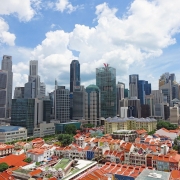
Why was Singapore separated from Malaysia?

Topic of Study [For H2 History Students]:
Paper 2: Regional Conflicts and Co-operation
Source Based Case Study
Theme III Chapter 1: Inter-state tensions and co-operation: Causes of inter-state tensions: racial and religious divisions, ideological differences

Historical Context: Merger with Malaya
On 16 September 1963, the Federation of Malaysia was established, comprising of Malaya, Singapore, Sarawak and North Borneo. Before the Federation was formed, a White Paper was published in November 1961 to outline terms of Singapore’s entry into Malaysia, such as the revenue contribution to the federal government and the creation of a common market between Singapore and Malaysia. However, there were political differences between the two governments that had affected the sustainability of the merger.

The Federal General Election of 1964
Following the Tunku’s contestation in the 1963 Singapore General Election, the People’s Action Party (PAP) participated in the 1964 General Election in Malaysia. Although the PAP had only secured one seat, extremists from the United Malays National Organisation (UMNO) viewed their non-communal style of politics had threatened the party’s interests. A smear campaign to discredit the PAP begun, which later culminated in the communal riots in July and September 1964.

Following the 1963 Singaporean elections, relations between UMNO and the PAP, with their competing multiracial visions quickly soured…These tensions began to be reflected in strained Malay-Chinse relations in Singapore, which were exacerbated when the Singapore-based PAP won a seat in the suburbs of the federal capital, Kuala Lumpur, in the general election in peninsular Malaysia in April 1964 by campaigning on the slogan of a “Malaysian Malaysia.” In this toxic political climate, the usually peaceful Malay procession to celebrate the Prophet Muhammad’s Birthday in Singapore quickly deteriorated in July 1963 into riots between Chinese secret society and Malay ultranationalist gangs.

An excerpt from “Multiculturalism in the British Commonwealth: Comparative Perspectives on Theory and Practice” by Richard T. Ashcroft and Mark Bevir.

Money matters: Disputes over tax and revenue contributions
On 25 November 1964, the Malaysian Finance Minister Tan Siew Sin brought up the Malaysian budget during the federal parliament. The budget sought to raise M$147 million through a policy of taxation, in which Singapore was required to contribute 39.8%.

In response, the Singapore government rejected the proposal on the basis that the disproportionate amount would harm businesses and labour-intensive industries.

Then, the minister stated that Singapore had to increase its revenue contribution to the federal government from 40 to 60%. Again, the Finance Minister of Singapore, Dr Goh Keng Swee, responded by stating that the 60% was not ‘equitable’.

These arrangements did not work out even though the Malaysia Agreement was signed on 9 July 1963, which included the creation of a common market.

The Malaysian Solidarity Convention: Multiculturalism in Malaysia
On 9 May 1965, the Malaysian Solidarity Convention was formed with the aim of fighting the spread of communalism in the Malaysian Federation.

The convention involved six political parties, comprising of the following:

  • Singapore – People’s Action Party
  • Sarawak – Machinda Party and United People’s Party
  • Peninsula Malaysia – People’s Progressive Party and United Democratic Party

Yes, we have got differing points of views, different experiences, different parties. But I tell you two things brought us together; one, the fact that we are Malaysians and not communalists; second, the fact that is spite of all this truculence, we are still talking for Malaysians on behalf of a Malaysian Malaysia towards a Malaysian Malaysia, and we will continue to do so.

An excerpt from Prime Minister of Singapore Mr. Lee Kuan Yew’s speech at the Malaysian Solidarity Convention at the National Theatre, 6 June 1965.

The convention sought to advocate the concept of a ‘Malaysian Malaysia’, so as to preserve the unity and stability of the Federation. As a result, the federal government objected to the convention, particularly during the parliament meeting on 25 May 1965.

From then on, the Tunku decided that the removal of Singapore from the Malaysian Federation was the only way to mend the political fissures.

The Separation: A different Singapore
On 9 August 1965, Singapore was declared independent. The Tunku made a similar announcement on the separation to the federal parliament in Kuala Lumpur. During a press conference, Prime Minister Lee explained why the separation took place.

But I would say that the Tengku convinced me and he told me that he could not go on holding the situation much longer and that he could see real trouble in Malaysia if Singapore continues to be in it.

…You see, this is a moment of … everytime we look back on this moment when we signed this agreement which severed Singapore from Malaysia, it will be a moment of anguish.

…There is nothing to be worried about it. Many things will go on just as usual. But be firm, be calm. We are going to have a multi-racial nation in Singapore. We will set the example.

An excerpt from the transcript of a press conference given by the Prime Minister of Singapore, Mr. Lee Kuan Yew, at Broadcasting House, 9 August 1965.

What can we learn from this article?
Consider the following question:
– How far do you agree that political differences most significant in affecting Singapore-Malaysia relations?

Join our JC History Tuition to learn more about regional conflicts and co-operation, such as the Merger and Separation. The H2 and H1 History Tuition feature online discussion and writing practices to enhance your knowledge application skills. Get useful study notes and clarify your doubts on the subject with the tutor. You can also follow our Telegram Channel to get useful updates.

We have other JC tuition classes, such as JC Math Tuition and JC Chemistry Tuition. For Secondary Tuition, we provide Secondary English Tuition, Secondary Math tuition, Secondary Chemistry Tuition, Social Studies Tuition, Geography, History Tuition and Secondary Economics Tuition. For Primary Tuition, we have Primary English, Math and Science Tuition. Call 9658 5789 to find out more.
Konfrontasi: Revisited

Topic of Study [For H2 History Students]:
Paper 2: Regional Conflicts and Co-operation
Source Based Case Study
Theme III Chapter 1: Inter-state tensions and co-operation: Causes of inter-state tensions: territorial disputes

The Confrontation
In July 1963, the Konfrontasi (Confrontation) began, threatening the socio-political stability of the newly-formed Malaysian Federation. The conflict had significant impacts on the perceptions of neighbouring countries toward Indonesia, especially after the formation of ASEAN.

Impacts on Indonesia-Malaysia relations
Bilateral relations were affected by the ‘ghost’ of Konfrontasi. With the the institutional support from the regional organisation, both parties were more willing to cooperate politically and economically.

Despite mutual high-level reassurances, relations thus remain somewhat ‘brittle’. Bilateral ties are still more contingent than institutionalized, and neither side seems sure of the other’s genuine goodwill or commitment to reciprocity – whether ‘bilateralism’ really means something more than involving two parties. Much as Konfrontasi has been ascribed at last in part to Sukarno’s grandstanding style and the verbal jousting between him and Tunku Abdul Rahman, which left little room for compromise, a change in domestic mood – especially in a rise in non-negotiable, emotional nationalism – can still dangerously curtail policy options or public support for particular positions.

An excerpt from “International Relations in Southeast Asia: Between Bilateralism and Multilateralism” by N. Ganesan and Ramses Amer.

Impacts on Indonesia-Singapore relations
For Singapore, the lingering impacts of the Konfrontasi on bilateral relations had subsided by the 1970s, following the Prime Minister’s visit to Jakarta. Furthermore, increased cooperation between the two nations in the 1980s and 1990s had helped to normalise relations.

Although it remains contentious as to whether the kind of multilateralism enjoined by ASEAN has brought about a regional security community, in the sense of its members having stable expectations of peaceful dispute resolution among themselves, most accounts of the regional organization argue that it has served to embed shared interests, trust, and habits of cooperation.

An excerpt from “International Relations in Southeast Asia: Between Bilateralism and Multilateralism” by N. Ganesan and Ramses Amer.

Regional cooperation: A new goal
Notably, the Konfrontasi was a reminder to member nations of ASEAN on the fragility of diplomatic relations. At the final stages of the conflict, efforts were made by Suharto and his counterparts to de-escalate tensions amicably.

In wrecking the prospects for MAPHILINDO, Konfrontasi had underscored the importance of regionalism by demonstrating the high costs of the use of force to settle intra-regional conflicts.

… While interest in regionalism among the five member states of ASEAN was a result of varied geopolitical considerations, all recognised ASEAN’s value as a framework through which to prevent a return to a Konfrontasi-like situation. As a regional forum under Indonesia’s putative leadership, ASEAN would first and foremost constrain Indonesia’s possible return to belligerence.

An excerpt from “Constructing a Security Community in Southeast Asia: ASEAN and the Problem of Regional Order (Politics in Asia)” by Amitav Acharya.

What can we learn from this article?
Consider the following question:
– Assess whether inter-state tensions have hindered regional cooperation after 1967.

Join our JC History Tuition to learn more about regional conflicts and co-operation. The H2 and H1 History Tuition feature online discussion and writing practices to enhance your knowledge application skills. Get useful study notes and clarify your doubts on the subject with the tutor. You can also follow our Telegram Channel to get useful updates.

We have other JC tuition classes, such as JC Math Tuition and JC Chemistry Tuition. For Secondary Tuition, we provide Secondary English Tuition, Secondary Math tuition, Secondary Chemistry Tuition, Social Studies Tuition, Geography, History Tuition and Secondary Economics Tuition. For Primary Tuition, we have Primary English, Math and Science Tuition. Call 9658 5789 to find out more.
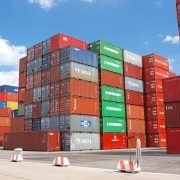
What is NAFTA and what is its purpose?

Topic of Study [For H2 History Students]: 
Paper 1: Understanding the Global Economy (1945-2000)
Section B: Essay Writing
Theme II Chapter 1: Problems of economic liberalisation

The North American Free Trade Agreement (NAFTA)
On 1 January 1994, the NAFTA was signed by three members – the United States, Mexico and Canada. Its purpose was to eliminate tariffs between the signatories, facilitating market integration. Furthermore, the agreement required all parties to support the gradual elimination of trade barriers over a course of fifteen years to enhance cross-border investment and the flow of goods and services.

Before the signing, the Mexican government sought US investment in the wake of the Latin American debt crisis. In June 1990, Mexican President Carlos Salinas de Gortari and the American President George H. W. Bush announced the creation of a free trade area between the United States and Mexico.

Impacts on involved parties
It turns out that the NAFTA yielded tremendous benefits to the trading partners. NAFTA amounted to a $6 trillion economy with a population of 360 million. By 2004, the NAFTA area expanded to a $12.5 trillion economy.

Wonnacott believes, that in one important way, the NAFTA is superior to treaties like the GATT, which allows developing countries to maintain many of their own barriers to liberalized imports. The NAFTA has effectively told Mexico and other future participants that if they want to participate in the agreement, they must be prepared to remove their own trade barriers.

An excerpt from “Nafta As a Model of Development: The Benefits & Costs of Merging High-And Low-Wage” by Richards S. Belous and Jonathan Lemco.

From the US perspective, the NAFTA was seen as a significant step forward to achieve encourage international trade. The agreement was meant to be a signal to other participating members of the GATT to re-affirm their commitment to achieve freer trade.

I am gratified that, as Vice President Gore and Chief of Staff Mack McLarty announced 2 weeks ago when they met with President Salinas, next year the nations of this hemisphere will gather in an economic summit that will plan how to extend the benefits of trade to the emerging market democracies of all the Americas.

The United States must seek nothing less than a new trading system that benefits all nations through robust commerce but that protects our middle class and gives other nations a chance to grow one, that lifts workers and the environment up without dragging people down, that seeks to ensure that our policies reflect our values.

An excerpt from US President Bill Clinton’s speech on the NAFTA, 8 December 1993.

What can we learn from this article?
Consider the following question:
– How far do you agree that the USA played a crucial role in the resurgence of trade in the 1990s?

Join our JC History Tuition to learn more about the development of the global economy. The H2 and H1 History Tuition feature online discussion and writing practices to enhance your knowledge application skills. Get useful study notes and clarify your doubts on the subject with the tutor. You can also follow our Telegram Channel to get useful updates.

We have other JC tuition classes, such as JC Math Tuition and JC Chemistry Tuition. For Secondary Tuition, we provide Secondary English Tuition, Secondary Math tuition, Secondary Chemistry Tuition, Social Studies Tuition, Geography, History Tuition and Secondary Economics Tuition. For Primary Tuition, we have Primary English, Math and Science Tuition. Call 9658 5789 to find out more.
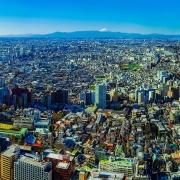
What caused Japan’s Lost Decade?

Topic of Study [For H2 History Students]: 
Paper 1: Understanding the Global Economy (1945-2000)
Section B: Essay Writing
Theme II Chapter 1: Problems of economic liberalisation

The geese ahead of the flock
Before the ‘Lost Decade‘, Japan’s economic progress have continued until it was the second largest in the world, after the United States. In fact, the ‘flying geese paradigm’ was used to refer to Japan as the frontrunner of economic development in Southeast Asia (contrast with the ‘Four Asian Tigers’).

The pattern was one in which first Japan, followed by its former colonies, achieved miracles of growth. They left such bastions of U.S. influence as the Philippines in the dust. South Korea, Taiwan, Hong Kong, and Singapore, followed by Thailand, Malaysia, and Indonesia were all members of Japan’s flock. Even China took its turn.

An excerpt from “How Asia Got Rich: Japan, China and the Asian Miracle” by Edith Terry.

Speculative activities: A growing asset bubble
After the Plaza Agreement was signed, Japanese Yen was twice the value of US dollar between 1985 and 1987, spurring speculators to plough their funds in assets and stocks. Additionally, borrowers could obtain funds from banks in Japan easily, fueling more speculative activities. Over time, stock and land prices surged.

Between January 1985 and December 1989 the real value of the Nikkei 225 stock price index tripled. By the middle of 1992, the index in real terms was less than 20% above its January 1985 level. Land prices have behaved similarly. An index of land prices in Japan’s six largest cities almost tripled in real terms between 1985 and 1990.

An excerpt from “Japan’s Bubble, Deflation, and Long-term Stagnation” by Kōichi Hamada, A. K. Kashyap, David E. Weinstein.

The Bank of Japan viewed the growing bubble as a threat. As such, it raised interest rates from 2.5% to 6% to discourage speculation. Consequently, borrowers were alarmed by higher interest rates as they anticipated their inability to finance their loans. Panic selling took place, causing the value of shares to plunge drastically.

By August 1990, the discount rate reached 6%. meanwhile, starting in 1990, the Bank of Japan sharply reduced the growth in the supply of money. Although Japanese officials were trying to engineer a soft landing by gradually deflating the speculative bubble, it burst with surprising speed. By October 1990, the Nikkei had fallen to nearly 20,000 yen. The price of real estate began its descent in 1991… Non-performing loans piled up at banks. Economic growth virtually ground to a halt, as it averaged only 1% per year from 1990-2003.

An excerpt from “Japan’s ‘Lost Decade’: Causes, Legacies and Issues of Transformative Change” by Miles Fletcher III, Peter W. von Staden.

What can we learn from this article?
Consider the following question:
– How far do you agree that the Japanese government was responsible for the ‘Lost Decade’?

Join our JC History Tuition to learn more about the development of the global economy. The H2 and H1 History Tuition feature online discussion and writing practices to enhance your knowledge application skills. Get useful study notes and clarify your doubts on the subject with the tutor. You can also follow our Telegram Channel to get useful updates.

We have other JC tuition classes, such as JC Math Tuition and JC Chemistry Tuition. For Secondary Tuition, we provide Secondary English Tuition, Secondary Math tuition, Secondary Chemistry Tuition, Social Studies Tuition, Geography, History Tuition and Secondary Economics Tuition. For Primary Tuition, we have Primary English, Math and Science Tuition. Call 9658 5789 to find out more.
What was the Plaza Accord?

Topic of Study [For H2 History Students]: 
Paper 1: Understanding the Global Economy (1945-2000)
Section B: Essay Writing
Theme II Chapter 1: Problems of economic liberalisation

New competitors; Trade deficits
Following the abandonment of the ‘gold standard’ in 1971, the United States (US) continued to experience severe trade deficits vis-à-vis Japan and West Germany. The Japanese Yen and German Deutsche Mark were relatively weaker than the US Dollar. This meant that these two advanced economies’ exports were cheaper than the American exports, fueling demand for the former group’s.

In the US, heavy manufacturers and automobile firms called for their politicians to embark trade protectionism. With American jobs at stake, the Reagan administration had to step in to manage this worrying trend.

At the beginning of the 1980s the American auto industry was reeling under pressure from foreign competition – deservedly so, as the quality of American-made autos from the Big Three was noticeably inferior to that of imports from Europe and Japan.

…Unable to meet this quality competition head-on, and having lost $4.2 billion in 1980, the Big Three American automakers pressed for the predictable solution: trade protectionism.

…After a heated debate at the White House, Reagan passively agreed to seek a “voluntary export restraint agreement” with Japan.

An excerpt from “The Age of Reagan: The Conservative Counterrevolution: 1980-1989” by Steven F. Hayward.

In addition to the voluntary export restraint (VER) with Japan that limited the number of imported automobiles, the US government oversaw the meeting with the G5 nations. The G5 comprised of industrialised nations, namely United Kingdom, Japan, West Germany, France and the US.

The Plaza Accord
On 22 September 1985, the G5 nations met at the Plaza Hotel in New York. At main outcome was the formulation of an agreement to depreciate the US dollar relative to the Japanese Yen and German Deutsche Mark.

The main purpose of the accord, however, was to address the United States-Japan trade imbalance by making American goods less expensive and Japanese goods more expensive, so that Japanese customers would buy inexpensive American goods and Japanese companies would have to raise their prices in dollar terms and therefore lose customers.

… The time from 1986 until the middle of 1990 in Japan is often referred to as the ‘bubble economy‘. This period saw massive expansion, primarily due to a rapid surge in domestic demand – a growth in capital investments and in personal spending. Stocks and real estate prices skyrocketed.

An excerpt from “Government, International Trade, and Laissez-Faire Capitalism: Canada, Australia, and New Zealand’s Relations with Japan” by Carin L. Holroyd.

Although the Accord did manage to reduce trade deficits, the repercussion on the Japanese economy was severe. As the Japanese Yen appreciated relative to the US dollar, individuals and firms purchased real estate and stocks, pushing up the prices artificially. Speculators used their newly-purchased real estate as collateral to buy more. Eventually, the expanding asset bubble burst, ushering the ‘Lost Decade’ in Japan.

What can we learn from this article?
Consider the following question:
– Assess the view that the Plaza Accord of 1985 was key in explaining the decline of the Japanese economy in the 1990s.

Join our JC History Tuition to learn how to write essays effectively. The H2 and H1 History Tuition feature online discussion and writing practices to enhance your knowledge application skills. Get useful study notes and clarify your doubts on the subject with the tutor. You can also follow our Telegram Channel to get useful updates.

We have other JC tuition classes, such as JC Math Tuition and JC Chemistry Tuition. For Secondary Tuition, we provide Secondary English Tuition, Secondary Math tuition, Secondary Chemistry Tuition, Social Studies Tuition, Geography, History Tuition and Secondary Economics Tuition. For Primary Tuition, we have Primary English, Math and Science Tuition. Call 9658 5789 to find out more.

Why did Nixon abandon the gold standard in 1971?

Topic of Study [For H2 History Students]: 
Paper 1: Understanding the Global Economy (1945-2000)
Section B: Essay Writing
Theme II Chapter 1: Problems of economic liberalisation

An unsustainable model
Ever since the Bretton Woods system was established in 1958, the convertibility of United States (US) dollars to gold was fixed at $35 an ounce. Initially, the US government held nearly 75 percent of the world’s official gold reserves, instilling confidence in the global monetary system.

However, demand for gold increased in the 1960s when exports from Western Europe and Japan became more competitive with the US. Additionally, the large Cold War expenditures contributed to excess supply of US dollars in circulation.

The economy falters
In the late 1960s, the US economy was hit by the increase in inflation (5.4%) and unemployment (6%) rates. An unexpected phenomenon has occurred – stagflation, which meant a combination of slow growth and high inflation.

In order to fight stagflation, US President Richard Nixon addressed the nation on 15 August 1971, declaring the end of the fixed exchange rate system that underpinned the Bretton Woods ‘gold standard’.

The Bretton Woods system of fixed exchange rates based on the free convertibility of the U.S. dollar into gold, which had been showing signs of strain for many years, came apart entirely on August 15, 1971. President Nixon’s announcement that the U.S. would no longer sell gold at $35 per ounce effectively set the dollar afloat. By December 1971, the dollar had fallen about 6% relative to a multilateral trade weighted average of currencies, as the world groped for a new international monetary system.

An excerpt from “Economic Policy and the Great Stagflation” by Alan S. Blinder.

Bold actions
During Nixon’s historic speech on 15 August, he raised three points to protect the US economy – lower unemployment rates, curb inflation and minimise international speculation.

For the third point, Nixon claimed that the ‘gold standard’ was not sustainable as currency speculators have been ‘waging an all-out war’ on the US dollar even though it functioned as a ‘pillar of monetary stability’ on the global scale.

I have directed Secretary Connally to suspend temporarily the convertibility of the American dollar except in amounts and conditions determined to be in the interest of monetary stability and in the best interests of the United States.

… If you want to buy a foreign car or take a trip abroad, market conditions may cause your dollar to buy slightly less. But if you are among the overwhelming majority of Americans who buy American-made products in America, your dollar will be worth just as much tomorrow as it is today.

The effect of this action, in other words, will be to stabilize the dollar.

An excerpt from a speech by Richard Nixon, 15 August 1971.

Nixon defended his position by asserting that the devaluation of the dollar was to ensure fair competition between the American workers and the rest of the world. Furthermore, he imposed a 10 percent tax on imported goods into the US as a temporary measure to protect domestic jobs.

Fragmentation of markets
In response, the European governments were taken aback by the policy shifts of the US government. On 10 September 1971, The New York Times reported that the imposition of tariff barriers may affect nearly 90 percent of the European exports to the US, amounting to $7 billion.

What can we learn from this article?
Consider the following question:
– How far do you agree that the collapse of the Bretton Woods fixed exchange rate system was a turning point?

Join our JC History Tuition to comprehend the complexities of the global economy. The H2 and H1 History Tuition feature online discussion and writing practices to enhance your knowledge application skills. Get useful study notes and clarify your doubts on the subject with the tutor. You can also follow our Telegram Channel to get useful updates.

We have other JC tuition classes, such as JC Math Tuition and JC Chemistry Tuition. For Secondary Tuition, we provide Secondary English Tuition, Secondary Math tuition, Secondary Chemistry Tuition, Social Studies Tuition, Geography, History Tuition and Secondary Economics Tuition. For Primary Tuition, we have Primary English, Math and Science Tuition. Call 9658 5789 to find out more.
The Japanese Economic Miracle: Revisited

Topic of Study [For H2 History Students]: 
Paper 1: Understanding the Global Economy (1945-2000)
Section B: Essay Writing
Theme II Chapter 1: Reasons for growth of the global economy

A global economic powerhouse: Japan
From 1968 to 2010, Japan gained international recognition as the world’s second largest economy. Before the devastating ‘Lost Decades’ of the 1990s, academics have sought to figure out the key factors that explained the remarkable growth of Japan. Notably, the keiretsu is well-known contributor of Japan’s economic growth.

Keiretsu: The Japanese business network
After World War Two, the United States dissolved the family-owned conglomerates known as the zaibatsu. Then, six major keiretsu (commonly known as the ‘Big Six’) were formed, such as Sumitomo, Fuyo, Sanwa and Mitsui. The keiretsu comprised of a group of large companies that connected different entities in the production line, like the manufacturers and distributors.

Thus, the Keiretsu can also be seen in practice as the major force behind the transformation of Japanese society from a postindustrial into a postmodern society, in close cooperation with powerful political and social influences.

An excerpt from “Keiretsu Economy – New Economy?: Japan’s Multinational Enterprises from a Postmodern Perspective” by R. Kensy.

These large business groups form interconnected networks to involve banks and industrialists to compete with local and foreign rival firms. Over time, the keiretsu accumulated market share, contributing to their economic dominance in Japan.

By the early 1970s, Japan became increasingly known in the global trade scene, such as the automobile industry. With support from the Japanese government, the keiretsu manufactured goods that rivalled competitors like the United States.

The government essentially closed the domestic market to foreign competition, to allow home-grown enterprises time to develop and prosper. Japanese businesses took the form of a series of keiretsu, vertically integrated companies that straddled virtually every facet of the Japanese economy. And the keiretsu, such as Mitsubishi, Matsui and others, enjoyed unbridled growth during the post-war period.

By the early 1970s, Japanese car makers were dominating even the once immune US market. The Japanese economic miracle was in full swing.

An excerpt from “The Routledge Companion to Global Economics” by Robert Beynon.

What can we learn from this article?
Consider the following question:
– Assess the importance of the state actors in causing the economic miracle of Japan in the post-war years.

Join our JC History Tuition and learn more about the Global Economy (1945-2000). The H2 and H1 History Tuition feature online discussion and writing practices to enhance your knowledge application skills. Get useful study notes and clarify your doubts on the subject with the tutor. You can also follow our Telegram Channel to get useful updates.

We have other JC tuition classes, such as JC Math Tuition and JC Chemistry Tuition. For Secondary Tuition, we provide Secondary English Tuition, Secondary Math tuition, Secondary Chemistry Tuition, Social Studies Tuition, Geography, History Tuition and Secondary Economics Tuition. For Primary Tuition, we have Primary English, Math and Science Tuition. Call 9658 5789 to find out more.