
What is the purpose of Tripoli Agreement?

Topic of Study [For H2 History Students]:
Paper 2: Search for Political Stability
Section B: Essay Writing
Theme I Chapter 2: Approaches to National Unity

Historical Background: Moro Muslim separatism
In May 1968, the Muslim Independence Movement (MIM) was formed in the wake of the ‘Corregidor Affair‘, in which the Philippine armed forces was being criticised for causing the killing of Moro Muslim soldiers for a secret operation to take over Sabah. The MIM aimed to lead political activities to create a separate Moro state in southern Philippines.

In October 1972, younger leaders of the MIM formed a splinter group known as the Moro National Liberation Front (MNLF) in Pulau Pangkor, Malaysia. They viewed the older Moro elites in the MIM as ineffective.

Conflagration: Martial Law of 1972
On 23 September 1972, President Ferdinand Marcos declared martial law, claiming that the growing violence between Christians and Muslims and the rise of an illegal separatist movement necessitated the use of authoritarian measures. In response, the Armed Forces of the Philippines (AFP) were deployed to suppress the Moro Muslim rebellions.

Within two months after the declaration of martial rule, in November 1972, the Moro National Liberation Front-Bangsa Moro Army (MNLF-BMA) launched a series of coordinated attacks on military outposts and announced to the world the struggle for independence of the Bangsa Moro. It declared the entirety of Mindanao, the Sulu archipelago and Palawan as the ancestral homeland of the Bangsa Moro. Its battlecry: “Victory or to the graveyard!”

An excerpt from “The Minoritization of Indigenous Communities of Mindanao and the Sulu Archipelago” by Rudy Buhay Rodil.

The MNLF operated from Malaysia and received military aid from abroad, notably Libya and Malaysia. One key figure of the MNLF, Hashim Salamat, made a personal visit to Libya and convinced the government to switch support from the MIM to the MNLF. Over time, more Moro rebels joined the MNLF, leading to the expansion of the separatist movement.

In 1974, the AFP led a major military operation to defeat the MNLF separatists. On the other hand, the MNLF stood their ground, receiving help from its external supporters. For instance, military advisors from Libya helped the MNLF to utilise guerilla tactics to oppose the AFP.

The Tripoli Agreement: An illusory peace?
In July 1975, the Organisation of the Islamic Conference (OIC) urged the Marcos government to reach a political settlement with the MNLF. The OIC is an inter-governmental organisation founded in 1969 to safeguard Muslim interests around the world and achieve peace and harmony.

On 23 December 1976, the Philippine government and the MNLF signed the Tripoli Agreement. It created the first autonomous region in the southern Philippines, including areas like Basilan, Palawan and Sulu. The Agreement meant to grant the autonomous government to have an executive council, legislative assembly, financial system and special regional security forces.

The Tripoli Agreement also benefited Marcos. The Philippine Armed Forces also badly needed a ceasefire. By approving an agreement which at first appeared to contain substantive concessions on his part, Marcos managed to reduce Islamic Conference pressure and even neutralize the Libyans, the MNLF’s strongest supporters. Moreover, Marcos held the power to implement the agreement as he saw fit.

An excerpt from “The Philippines Reader: A History of Colonialism, Neocolonialism, Dictatorship, and Resistance” by Daniel B. Schirmer and Stephen Rosskamm Shalom.

When the MNLF requested Marcos to implement the Tripoli Agreement by executive order, he submitted it to a referendum within the provinces that would be part of the newly-proposed autonomous region instead. On 17 April 1977, a majority of voters objected the Agreement.

Given that the Agreement failed to create a unified autonomous region led by the MNLF, the leaders ended talks with the Marcos government and rallied its members to resume guerilla attacks and demand complete independence. Notably, MNLF leaders Hashim Salamat and Nur Misuari left the group and established the Moro Islamic Liberation Front (MILF). Salamat asserted that the MNLF should have pursued the goal of creating an Islamic nation.

However, on 4 January the Philippine government announced that a referendum would be held in the southern provinces to ascertain which wanted to be autonomous; other areas could have their own referenda, so diluting the Muslim character of the south. Gaddafi did not like the sound of this, and the MNLF flatly rejected the idea of a referendum. To sweeten the pill Marcos promised a conditional amnesty for Muslim rebels in the south and then promulgated new laws for a Muslim court system. The fresh talks in Tripoli collapse, the Marcos envoy returned to Manila, and the MNLF threatened to resume hostilities; by now the Moros were demanding their own flag, their own army, and the incorporation of three Christian provinces (offering offshore oil and good farmland) into the Muslim area.

An excerpt from “Libya: The Struggle for Survival ” by G L Simons and Isaline Bergamaschi.

What can we learn from this article?
Consider the following question:
– Assess the political reasons that explain the rise of separatism in independent Southeast Asian states.

Join our JC History Tuition to learn more about the Approaches to National Unity. The H2 and H1 History Tuition feature online discussion and writing practices to enhance your knowledge application skills. Get useful study notes and clarify your doubts on the subject with the tutor. You can also follow our Telegram Channel to get useful updates.

We have other JC tuition classes, such as JC Math Tuition and JC Chemistry Tuition. For Secondary Tuition, we provide Secondary English Tuition, Secondary Math tuition, Secondary Chemistry Tuition, Social Studies Tuition, Geography, History Tuition and Secondary Economics Tuition. For Primary Tuition, we have Primary English, Math and Science Tuition. Call 9658 5789 to find out more.
What is the Free Aceh Movement?

Topic of Study [For H2 History Students]:
Paper 2: Search for Political Stability
Section B: Essay Writing
Theme I Chapter 2: Approaches to National Unity

Historical Background
Aceh is located in the north-western tip of Sumatra. Notably, the Acehnese supported the practice of Islam. In the 1950s, Aceh rallied behind the Darul Islam rebellion, which resulted in a partial acceptance by the Sukarno government to grant a ‘special region’ status for Aceh. It was seen as an accommodative response by the government, enabling the Acehnese to manage their own matters relating to religion, education and customary law.

To put an end to the violence, Aceh was granted the status ‘Special Region of Aceh’ (Daerah Istimewa Aceh) in 1959, supposedly having autonomy in matters pertaining to Religion, Education and Customary law. However, most Acehnese claim that this ‘special status’ is a farce because on most occasions, the central government in Jakarta enforces its national laws, even when these laws completely contradict local customs. For example, in the late 1980s when the central government announced a national anti-jilbab (veil) policy – Aceh was also forced to bow down to national policy.

An excerpt from “Gender, Islam, Nationalism and the State in Aceh: The Paradox of Power, Co-optation and Resistance” by Joy Aquino Siapno.

However, problems began to surface due to growing discontent over two reasons. First, the transmigration policy involved the relocation of workers from the overpopulated Java to other islands, including Aceh. Consequently, Javanese immigrants occupied the mountains and industrial zones on the Aceh coast, cutting off Acehnese access to fish and rice for subsistence.

Second, public discontent related to the distribution of Aceh’s natural resource. Although the Aceh supplies thirty percent of Indonesian oil and natural gas by the late 1980s, it was still one of the poorest provinces in the country.

Free Aceh Movement
A former Darul Islam leader Hasan di Tiro formed the Free Aceh Movement (Gerakan Aceh Merdeka) in December 1976. The separatists aimed to create an independent Islamic state. GAM went through four key phases, the late 1970s, 1980s, 1990s and early 2000s as result of military operations launched by Jakarta. Under Suharto’s New Order, the Indonesian army (Tentera Nasional Indonesia, TNI) mobilised its troops to quell the separatist insurgencies from the late 1970s to 1990s.

Tensions continued to rise, and in 1989, the civil war resumed. Attempts to negotiate a settlement with the Scandinavian-based exiled leadership were halfhearted at best. The war was bloody and very costly for GAM, with several thousand members killed. The TNI increased its presence in the province throughout the 1990s, reaching a peak of thirty thousand troops (the police were part of the army until 1999).

[…] GAM’s fourth phase began in 1999 with a renewed offensive to take advantage of the collapse of the Suharto regime/military-backed government. The system of civilian administration by the military ended, though civil administration was very weak. The military was on the defensive for human rights abuses and its role in keeping Suharto in power, so GAM seized the initiative and launched a wave of attacks. GAM truly believed that Indonesia was on the cusp of being a failed state and that independence was inevitable.

An excerpt from “Forging Peace in Southeast Asia: Insurgencies, Peace Processes, and Reconciliation” by Zachary Abuza.

Peaceful resolution and an unexpected national disaster
In December 2002, GAM and the Indonesian government signed a Cessation of Hostilities Agreement, allowing for temporary ceasefire between the parties. Although the agreement broke down, GAM ceased hostilities after a massive earthquake in the Indian Ocean occurred on 26 December 2004, which caused a tsunami that affected numerous Acehnese. Both the GAM and government focused on providing humanitarian relief to the affected people.

In February 2005, another round of peace talks were held in Finland. Five months later, a peace deal was finally reached, ending the three decade-long insurgency.

The Government of Indonesia (GoI) and the Free Aceh Movement (GAM) confirm their commitment to a peaceful, comprehensive and sustainable solution to the conflict in Aceh with dignity for all.

The parties commit themselves to creating conditions within which the government of the Acehnese people can be manifested through a fair and democratic process within the unitary state and constitution of the Republic of Indonesia.

The parties are deeply convinced that only the peaceful settlement of the conflict will enable the rebuilding of Aceh after the tsunami disaster on 26 December 2004 to progress and succeed.

An excerpt from “Memorandum of Understanding between the Government of the Republic of Indonesia and the Free Aceh Movement”, 15 August 2005.

What can we learn from this article?
Consider the following question:
– How far do you agree that minority responses were most important in affecting government efforts to forge national unity?

Join our JC History Tuition to learn more about the Approaches to National Unity. The H2 and H1 History Tuition feature online discussion and writing practices to enhance your knowledge application skills. Get useful study notes and clarify your doubts on the subject with the tutor. You can also follow our Telegram Channel to get useful updates.

We have other JC tuition classes, such as JC Math Tuition and JC Chemistry Tuition. For Secondary Tuition, we provide Secondary English Tuition, Secondary Math tuition, Secondary Chemistry Tuition, Social Studies Tuition, Geography, History Tuition and Secondary Economics Tuition. For Primary Tuition, we have Primary English, Math and Science Tuition. Call 9658 5789 to find out more.
What is the Chiang Mai Initiative?

Topic of Study[For H2 History Students]:
Paper 2: Economic Development after Independence
Section B: Essay Writing
Theme II Chapter 2: Asian Financial Crisis

The Asian Financial Crisis: A regional solution
In view of the disastrous impacts caused by the Asian Financial Crisis, member states of the regional organisation ASEAN gathered to discuss the possible responses to mitigate the adverse impacts.

On 6 May 2022, ASEAN, China, Japan and South Korea gathered in Chiang Mai, Thailand, to discuss the creation of a network of bilateral currency swap agreements. The meeting took place as part of the 33rd Annual Meeting of the Board of Governors of the Asian Development Bank (ADB). Participants were described as “ASEAN+3” (APT).

But very soon, particularly in the wake of the Asian financial crisis, the APT evolved into an institutionalized forum of consultation and cooperation between ASEAN and three Northeast Asian powers over a growing range of regional issues, including economic cooperation, financial and monetary cooperation, social and human resource development, scientific and technical development, culture, information, development, political and security areas, and various transnational issues.

An excerpt from “The Politics of Economic Regionalism: Explaining Regional Economic Integration in East Asia” by Kevin G. Cai.

The Chiang Mai Initiative (CMI)
The Initiative was introduced to avert a similar disaster. The ASEAN+3 members also proposed the creation of a pool of foreign exchange reserves, which will be accessible by participating central banks to stave off currency speculation.

A most important achievement of the APT in the wake of the Asian financial crisis seemed to be the introduction of the Chiang Mai initiative (CMI) in 2000, which led to the establishment of a system of 15 bilateral currency swap arrangements among APT member states plus ASEAN swap arrangement that was designed to improve regional financial stability. Efforts were then made to multilateralize the CMI by converting bilateral swap arrangements into a common funding pool of foreign exchange reserves.

An excerpt from “The Politics of Economic Regionalism: Explaining Regional Economic Integration in East Asia” by Kevin G. Cai.

The APT conference had officiated the “Asian Currency Cooperation Plan”, which functioned on two paths. First, a currency exchange agreement was developed to allow the exchange of financial information. Second, a supervising institution was set up to prevent possible currency crises through close coordination between central banks of partner nations.

The present exchange agreement implies, in fact, that Japan works as the supplier of currency in international exchange. Japan and Korea can mutually exchange $7 billion in dollar-Korean won; Japan and Thailand signed a U.S. dollar-baht exchange agreement worth $3 billion; Japan and the Philippines reached an agreement worth $3 billion; Japan and Malaysia reached agreement to exchange $3.5 billion;

An excerpt from “Co-design for a New East Asia After the Crisis” by Hitoshi Hirakawa and Young-Ho Kim.

What can we learn from this article?
Consider the following question:
– Assess the view that Southeast Asian governments were effective in their responses to the 1997 Asian Financial Crisis.

Join our JC History Tuition to learn more about Asian Financial Crisis. The H2 and H1 History Tuition feature online discussion and writing practices to enhance your knowledge application skills. Get useful study notes and clarify your doubts on the subject with the tutor. You can also follow our Telegram Channel to get useful updates.

We have other JC tuition classes, such as JC Math Tuition and JC Chemistry Tuition. For Secondary Tuition, we provide Secondary English Tuition, Secondary Math tuition, Secondary Chemistry Tuition, Social Studies Tuition, Geography, History Tuition and Secondary Economics Tuition. For Primary Tuition, we have Primary English, Math and Science Tuition. Call 9658 5789 to find out more.
What is the significance of the Geneva Accords of 1954?

Topic of Study [For H2 History Students]: 
Paper 1: Understanding the Cold War (1945-1991)
Section A: Source-based Case Study
Theme I Chapter 2: A World Divided by the Cold War – Manifestations of the global Cold War: Vietnam War (1959-75)

Topic of Study [For H1 History Students]:
Essay Questions
Theme III Chapter 1: The Cold War and Southeast Asia (1945-1991): Factors shaping the Second Indochina War (1959–1975)

Historical Context
From 1946 to 1954, the French colonial power fought against the Viet Minh led by Ho Chi Minh. The United States backed the French due to fears of Communist expansion in Southeast Asia, given the Communist leanings of the Vietnamese forces.

The decisive Battle of Dien Bien Phu in March 1954 ended with the French defeat. As a result, the French withdrew from Vietnam.

The repercussions of Dien Bien Phu were swiftly felt around the world. Charles de Gaulle had always been adamant that the loss of Indochina would spell the end of the French empire.

[…] Nonetheless, Indochina’s nationalists achieved almost all their goals with the Geneva Accords of 21 July 1954. Cambodia and Laos had their independence recognized, while Vietnam was divided along the 17th Parallel. This created a formal ceasefire line, which accepted communist control of the north but not the south. Washington was far from happy with this latter concession. To some, it looked like Korea all over again.

An excerpt from “Dien Bien Phu (Cold War 1945–1991)” by Anthony Tucker-Jones.

The Geneva Conference
On 26 April 1954, the United States, Soviet Union, People’s Republic of China, France and Great Britain gathered in Geneva, Switzerland to discuss the future of Indochina and outstanding matters from the Korean War that ended in an armistice a year ago.

In July, the Geneva Agreement were signed. There were three key takeaway points from the Agreement:

  1. The French withdrew their forces from northern Vietnam
  2. Vietnam would be divided at the 17th Parallel temporarily
  3. Elections to be held within two years to select a president and reunify Vietnam

The Conference declares that, so far as Viet-Nam is concerned, the settlement of political problems, effected on the basis of respect for the principles of independence, unity and territorial integrity, shall permit the Viet-Namese people to enjoy the fundamental freedoms, guaranteed by democratic institutions established as a result of free general elections by secret ballot.

An excerpt from the Geneva Agreements, 20-21 July 1954.

Ho Chi Minh signed the agreement, but not the United States. Some American officials expressed concerns that the election outcome may not be in their favour, given Ho’s popularity. As such, the US government propped up an anti-Communist government in South Vietnam.

In October 1956, the Republic of Vietnam was proclaimed by President Ngo Dinh Diem, who replaced the French-backed puppet Emperor Bao Dai.

Shortly thereafter, the [Eisenhower] administration affirmed its commitment to the containment of communist influence in Southeast Asia by signing the Manila Pact, which provided for the creation of the Southeast Asia Treaty Organization (SEATO). Fatefully, it also began a comprehensive aid program, jointly with the French at first, to prop up the regime of Ngo Dinh Diem in Saigon as a bulwark against communist expansion in Vietnam. Soon Americans were training Diem’s fledgling armed forces and becoming otherwise more directly involved in Indochina.

An excerpt from “Hanoi’s Road to the Vietnam War, 1954-1965” by Pierre Asselin.

What can we learn from this article?
Consider the following question:
– How far do you agree that political factors were most significant in influencing the start of the Vietnam War in the 1960s?

Join our JC History Tuition to learn more about the Vietnam War, Korean War and Cuban Missile Crisis. The H2 and H1 History Tuition feature online discussion and writing practices to enhance your knowledge application skills. Get useful study notes and clarify your doubts on the subject with the tutor. You can also follow our Telegram Channel to get useful updates.

We have other JC tuition classes, such as JC Math Tuition and JC Chemistry Tuition. For Secondary Tuition, we provide Secondary English Tuition, Secondary Math tuition, Secondary Chemistry Tuition, Social Studies Tuition, Geography, History Tuition and Secondary Economics Tuition. For Primary Tuition, we have Primary English, Math and Science Tuition. Call 9658 5789 to find out more.
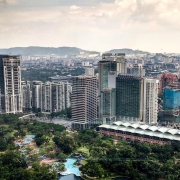
What is the Look East Policy of Malaysia?

Topic of Study [For H2 History Students]:
Paper 2: Economic Development after Independence
Section B: Essay Writing
Theme II Chapter 1: Paths to Economic Development

Historical context: Learning from the best
Six months after Dr. Mahathir assumed the role as the Prime Minister of Malaysia, his administration launched the ‘Look East Policy‘ in February 1982, which called upon Malaysians to emulate the Japanese work ethic and business management techniques. By doing so, the government aims to acquire Japanese expertise and capital through bilateral trade and investment.

To Mahathir, the definition of ‘East’ consisted of Japan and South Korea. Interesting, Taiwan and Singapore were not being raised as case study references.

Mahathir also mentioned two features which Malaysia proposed to adopt from the Japanese model. One was the concept of Malaysia Incorporated, intended to encourage business owners and workers in the public and private sectors to work together. Another was to create large companies based on the Japanese sogo shoshas (the large trading companies), although in Malaysia these were not developed as rapidly as the Prime Minister would have wished.

An excerpt from “Malaysian Politics Under Mahathir” by Diane K. Mauzy and R. S. Milne.

Two-pronged approach
The ‘Look East Policy’ had two parts. First, Malaysians studied at the Japanese universities. Second, trainees worked at Japanese industries. The program was mainly financed by the Malaysian government, while the Japanese counterpart deployed Japanese trainers and covered part of the expenditure.

No one can dispute that Japan achieved a miracle when it rebuilt itself after the war. How did it do it? It did it by not being advised by other people. It did it in its own way. The only advice it accepted was to produce high quality goods, goods of world standards, so as to be accepted by the world markets. The rest was entirely Japanese.

[…] Japan has been censured for the close cooperation between the government and the corporations. Japan incorporated was regarded as some kind of cronyism involving the government and the private sector. Malaysia sees nothing wrong in the close collaboration between government and the private sector. The government should help the private sector to succeed because a large chunk of the profits made by the private sector belongs to the government. In helping the private sector the government is actually helping itself.

An excerpt from a speech by Dato’ Seri Dr. Mahathir bin Mohamad, Prime Minister of Malaysia, on “Look East Policy – The Challenges for Japan in a Globalized World“, in 2002, marking the 20th anniversary of the ‘Look East Policy’.

Dr. Mahathir held a firm belief that the ‘Look East Policy’ was vital in realising his Vision 2020, an aim to transform Malaysia into fully developed nation by doubling the Gross Domestic Product (GDP) every decade between 1990 and 2020. Japan was identified as a integral role to fulfil this national aim.

A pipedream in the making?
However, government efforts to emulate the successful Japanese model were obstructed by several factors. One such problem was the cultural differences. For instance, the Japanese employees have adapted to long working hours, but there was resistance from the Malaysians.

Another issue was related to the differences in economic development. While Japan was a pro-Capitalist developed nation, Malaysia was still in the process of transforming from a developing nation to a newly-industrialised economy.

The application of the ‘Look East Policy’ can be traced to the establishment of the Heavy Industry Corporation of Malaysia (HICOM) in 1980, which was also key feature in Mahathir’s policymaking in the 1980s. With the help of a team of United Nations development experts, HICOM formed companies, such as the Proton Saga national car project (Perusahaan Otomobil Nasional) and the Perwaja Terengganu steel mill.

While still Minister of Trade and Industry, Mahathir contacted Mitsubishi, apparently without sounding out any other possible Japanese partners, and reached agreement with Mitsubishi.

[…] There seems to have been reluctance to make use of knowledgeable Chinese in the Proton project. However, on marketing and selling, the government relied on existing Chinese firms. There was some truth in comments that the Proton was not really a Malaysian car, but a Japanese car with a Malaysian “chop” (name). In 1994 Mahathir accepted this, admitting that Malaysia would not have the know-how to produce a fully fledged car for ten to fifteen years.

An excerpt from “Malaysian Politics Under Mahathir” by Diane K. Mauzy and R. S. Milne.

What can we learn from this article?
Consider the following question:
– How far do you agree that external actors were more important than domestic actors in promoting economic development of Southeast Asian states?

Join our JC History Tuition to learn more about the Paths to Economic Development. The H2 and H1 History Tuition feature online discussion and writing practices to enhance your knowledge application skills. Get useful study notes and clarify your doubts on the subject with the tutor. You can also follow our Telegram Channel to get useful updates.

We have other JC tuition classes, such as JC Math Tuition and JC Chemistry Tuition. For Secondary Tuition, we provide Secondary English Tuition, Secondary Math tuition, Secondary Chemistry Tuition, Social Studies Tuition, Geography, History Tuition and Secondary Economics Tuition. For Primary Tuition, we have Primary English, Math and Science Tuition. Call 9658 5789 to find out more.
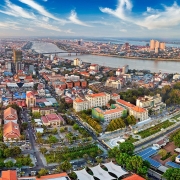
What is the Coalition Government of Democratic Kampuchea?

Topic of Study [For H2 History Students]:
Paper 2: Regional Conflicts and Co-operation
Source Based Case Study
Theme III Chapter 2: ASEAN (Growth and Development of ASEAN: Building regional peace and security – relations between ASEAN and external powers)

Topic of Study [For H1 History Students]:
Essay Questions
Theme II Chapter 2: The Cold War and Southeast Asia (1945-1991): ASEAN and the Cold War (ASEAN’s responses to Cold War bipolarity)

Historical context: Third Indochina War
In December 1978, Vietnamese forces entered Cambodian territory and toppled the Khmer Rouge regime. Subsequently, the pro-Vietnamese People’s Republic of Kampuchea (PRK) was formed, led by Cambodian politician Heng Samrin.

An ASEAN-backed solution: Enter the Coalition
In 1980, ASEAN and China urged the Khmer Rouge and the royalists to join forces and form a coalition group to prevent the legitimisation of the PRK government. Norodom Sihanouk had set some conditions before returning to politics, such as disarmament to prevent another round of atrocities committed by the Khmer Rouge as well as the deployment of peacekeepers after the Vietnamese withdrawal.

Notably, Sihanouk also requested that the country’s official name be changed from Democratic Kampuchea to Cambodia.

Leaders of the political factions Sihanouk, Son Sann and Khieu Samphan attended a summit hosted by Singapore in September 1981. Eventually, a ‘four-points’ agreement was made, which included the formation of a Coalition Government of Democratic Kampuchea (CGDK).

With the CGDK being formed, the factions can garner foreign military support for the other two factions besides the Khmer Rouge, particuarly the Khmer People’s National Liberation Front (KPNLF) and National United Front for an Independent, Neutral, Peaceful and Cooperative Cambodia (FUNCINPEC).

On 22 June 1982, the three leaders signed an agreement to officiate the establishment of the CGDK in Kuala Lumpur. The June agreement stated that the CGDK’s aim was to “mobilize all efforts in the common struggle to liberate Kampuchea from the Vietnamese aggressors”.

More importantly, the three political factions in the coalition group would share power equally and make decisions through consensus.

On June 22, 1982, the three coalition leaders met in Kuala Lumpur to sign an agreement establishing a Coalition Government of Democratic Kampuchea (CGDK), on the basis of four principles. Prince Norodom Sihanouk was president, with Son Sann the premier and Khieu Samphan the vice president, in charge of foreign affairs. […] and the new president launched an appeal to all friendly countries to bring aid and support for the “sacred cause”, the restoration of peace in Kampuchea and stability and security in that part of the world.

An excerpt from “Cambodia Confounds the Peacemakers, 1979-1998” by Macalister Brown and Joseph Jermiah Zasloff.

What can we learn from this article?
Consider the following question:
– How far do you agree that ASEAN played a crucial role in the resolution of the Cambodian Crisis?

Join our JC History Tuition to learn more about the Regional Conflicts and Cooperation. The H2 and H1 History Tuition feature online discussion and writing practices to enhance your knowledge application skills. Get useful study notes and clarify your doubts on the subject with the tutor. You can also follow our Telegram Channel to get useful updates.

We have other JC tuition classes, such as JC Math Tuition and JC Chemistry Tuition. For Secondary Tuition, we provide Secondary English Tuition, Secondary Math tuition, Secondary Chemistry Tuition, Social Studies Tuition, Geography, History Tuition and Secondary Economics Tuition. For Primary Tuition, we have Primary English, Math and Science Tuition. Call 9658 5789 to find out more.
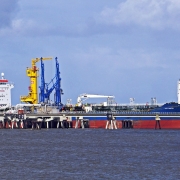
How did the 1970s oil crises affect Southeast Asia?

Topic of Study [For H2 History Students]:
Paper 2: Economic Development after Independence
Section B: Essay Writing
Theme II Chapter 1: Paths to Economic Development

Historical context: The 1970s oil shocks
In the early 1970s, petrostates in the Arab world agreed to boycott Western nations, such as the USA and UK, for their provision of support to Israel during the Yom Kippur War against Egypt. As a result, crude oil prices quadrupled from $3 per barrel to $12 per barrel by 1974.

The second oil shock took place between 1978-1979, in which the Iranian Revolution concluded with the fall of the Shah’s regime. At that time, Iran was the world’s second-largest oil exporter. With the temporary halt in oil production in Iran, the political turmoil had further devastated the world oil markets, causing oil prices to surge to nearly $30 per barrel by early 1980.

A windfall in Indonesia: Surge of petrodollars
In Southeast Asia, oil exporting nations like Indonesia benefited from this unprecedented development, given their membership in the Organisation of Petroleum Exporting Countries (OPEC). The oil price in Indonesia increased from $1.67 per barrel in 1970 to $35 in 1981.

With large inflows of revenues from oil exports, the Indonesian government used these surpluses to correct its balance of payment deficits. Furthermore, the New Order government used the oil revenues to expand the manufacturing sector, particularly through import purchases of raw materials and capital goods. More importantly, President Suharto embarked on ambitious large-scale development programs in different parts of Indonesia, including Java.

Due to the higher oil revenues, the Indonesian government was able to undertake substantial public investments and expand and improve the efficiency of the public administration sector (for instance by raising the salaries of public servants) which, in turn, contributed to economic growth.

[…] After the early 1970s first foreign aid and then oil revenues were spent on rehabilitating and expanding the long-neglected physical infrastructure (particularly in rural areas) and transport infrastructure. This rapid expansion and improvement of the physical and transport infrastructure involved roads, railways, bridges, harbours, airports and communications.

An excerpt from “Emergence of a National Economy: An Economic History of Indonesia, 1800-2000” by Howard Dick, Vincent J. H. Houben, J. Thomas Lindblad and Kian Wie Thee.

A temporary setback: For oil-importing nations in Southeast Asia
In contrast to Indonesia and Malaysia, oil-importing nations like Thailand, Malaysia, Singapore and the Philippines were adversely affected by the rise in oil prices. Higher oil prices meant a decline of the terms of trade as well as their balance of payment positions.

Thailand was hit harder by the second oil crisis and the subsequent world-wide recession because the country had become more dependent on external trade, and the external terms of trade were no longer favourable. […] The rate of inflation as measured by the consumer price index, which was 7 to 10 percent during the period 1977-1979, accelerated to 19.7 percent in 1980. Economic growth slowed somewhat to an annual growth rate of 7 percent in the 1970s, with the manufacturing sector growing at a higher-than-average rate of around 10 percent per annum.

An excerpt from “Economic Development in East and Southeast Asia: Essays in Honor of Professor Shinichi Ichimura” by Seiji Naya and Akira Takayama.

What can we learn from this article?
Consider the following question:
– How far do you agree that governments were responsible for the economic instability in independent Southeast Asia?

Join our JC History Tuition to learn more about the Paths to Economic Development. The H2 and H1 History Tuition feature online discussion and writing practices to enhance your knowledge application skills. Get useful study notes and clarify your doubts on the subject with the tutor. You can also follow our Telegram Channel to get useful updates.

We have other JC tuition classes, such as JC Math Tuition and JC Chemistry Tuition. For Secondary Tuition, we provide Secondary English Tuition, Secondary Math tuition, Secondary Chemistry Tuition, Social Studies Tuition, Geography, History Tuition and Secondary Economics Tuition. For Primary Tuition, we have Primary English, Math and Science Tuition. Call 9658 5789 to find out more.

How did Giant become the biggest bicycle manufacturer in the world?

Paper 1: Understanding the Global Economy (1945-2000)
Section B: Essay Writing
Theme II Chapter 3: Rise of Asian Tigers from 1970s to 1990s [South Korea and Taiwan] 

Humble beginnings: A SME run by family and friends
In 1972, a 36 year-old engineer King Liu founded Giant with a group of associates, including Tony Lo, in Taichung (臺中). Lo was a business graduate from the National Taiwan University. Interestingly, Liu cycled to work at first to understand his product better.

In 1977, Liu secured a contract to produce bicycles for an overseas American company Schwinn, which was known for its 10-speed steel machines. Giant then functioned as an Original Equipment Manufacturer (OEM). Liu, who was fluent in Japanese, visited Japan to study the bicycle production process, replicating suitable work practices at Giant.

An unexpected turn of events: Turning setbacks into opportunities for success
In 1981, Giant set up its own bicycle brand as an Original Brand Manufacturer (OBM). It was a bold and unusual move as products that were manufactured in Taiwan were still viewed as low-quality and cheap.

Five years later, Giant brought its bicycles to the global market, starting with the Netherlands. Lo had identified Netherlands as a suitable European headquarters due to its geographical location, comprehensive infrastructure and integrated transport network. From there, Giant exported to other European markets. By the mid-1980s, Giant exported nearly 10 million bicycles a year.

The own-branding strategy was intensified when Schwinn shifted its OEM orders to its joint China’s company (China Bicycle Company) in 1985. Under this adverse condition, Liu steered the company into a new direction, through rapidly expanding its overseas branches around the world, in order to fill up the excess capacity generated by Schwinn’s withdrawal. The overseas branches were all targeted on pursuing entrepreneurial profit by promoting its own-brand Giant bicycles. Its overseas branch was established in Netherlands in 1986, the Us in 1987, Japan in 1989, Canada and Australia in 1991, and mainland China in 1992.

An excerpt from “Entrepreneurship and Taiwan’s Economic Dynamics” by Fu-Lai Tony Yu.

In the 1985, the US-based Schwinn switched to a Chinese supplier to keep production costs low. As a result, nearly three-quarters of Giant’s revenue had been affected. Yet, Giant did not relent. Instead, the company capitalised on the low production base in China, setting up two production plants in China, namely in Shanghai (上海) and Jiangsu (江苏).

Close collaboration with the government
In 1986, Giant launched a joint project with the government-funding Industrial Technology Research Institute (ITRI). They explored use of advanced materials to create carbon fiber bicycle frames. Giant also worked on other technology diffusion projects for aluminum welding with Chun Shan Institute of Science and Technology (CSIST).

Giant’s R&D efforts had paid off as tts revenue rose to over NT$ one billion.

In 1987, Giant pioneered the mass production of carbon bicycles, particularly the model called Cadex 980C. Lo dubbed it ‘Project 88’. Giant had applied computer-aided design and volume production techniques to manufacture these carbon fiber road bicycles. By 1991, Giant manufactured 20 thousand units of carbon bicycles.

Now, Giant one of the top bicycle manufacturers in the world.

Giant thinks of itself as an innovator in the fields of production and design, as well as competitive strategy. Giant was one of the first to upgrade parts and begin exporting them when Taiwan’s market became too costly. Giant was also the first Taiwanese company to use chrome alloy steel in their frames and to produce single-piece graphite bicycle frames.

An excerpt from “Strategy, Structure, and Performance of MNCs in China” by Yadong Luo.

What can we learn from this article?
Consider the following question:
– How far do you agree that Giant’s successes in export promotion were the result of Confucian culture?

Join our JC History Tuition to learn more about the rise of Asian Tiger economies and the Global Economy. The H2 and H1 History Tuition feature online discussion and writing practices to enhance your knowledge application skills. Get useful study notes and clarify your doubts on the subject with the tutor. You can also follow our Telegram Channel to get useful updates.

We have other JC tuition classes, such as JC Math Tuition and JC Chemistry Tuition. For Secondary Tuition, we provide Secondary English Tuition, Secondary Math tuition, Secondary Chemistry Tuition, Social Studies Tuition, Geography, History Tuition and Secondary Economics Tuition. For Primary Tuition, we have Primary English, Math and Science Tuition. Call 9658 5789 to find out more.
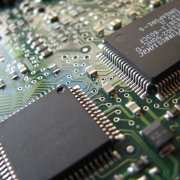
What does United Microelectronics do?

Paper 1: Understanding the Global Economy (1945-2000)
Section B: Essay Writing
Theme II Chapter 3: Rise of Asian Tigers from 1970s to 1990s [South Korea and Taiwan] 

Historical context: Silicon Valley of the East
On 22 May 1980, the United Microelectronics Corporation (UMC) was formed as the first-ever private integrated circuit (IC) company in Taiwan. The UMC was a product of the state-backed technology R&D institution, known as the Industrial Technology Research Institute (ITRI).

Under the leadership of President Chiang Ching-kuo (蔣經國), the government embarked on an ambitious project to encourage knowledge and skills acquisition in the private sector to intensify Taiwan’s industrial development.

The UMC occupied the Hsinchu Science Park (HSIP, 新竹科學園區), which was modelled after the Silicon Valley.

Located in Hsinchu County, approximately 80 km to the south of the capital city Taipei, HSIP had easy access to the international airport and harbours, a skilled labour force and abundant technological resources, including two national universities and the government-sponsored ITRI. Since its inception, HSIP has received over US$500 million from the government, earmarked for the acquisition and development of land and construction of housing and factories.

An excerpt from “The Silicon Dragon: High-Tech Industry in Taiwan” by Terence Tsai and Bor-Shiuan Cheng.

Enter the age of semiconductors
Under the astute leadership of Robert Tsao (曹興誠), who became president of UMC in 1982, the UMC became the first IC manufacturer in Taiwan to provide wafer foundry services.

In the late 1980s, the UMC broadened its scope of production, venturing into Dynamic Random Access Memory (DRAMs) and telecommunications circuitry. Tsao believed that specialisation in foundry services was the ideal model for the UMC to thrive.

The UMC turned out to be a successful spin-off from HSIP, as seen by its entry to the Taiwan Stock Exchange in 1985. From then on, the UMC went further to build increasingly advanced chips, such as Static Random Access Memory (SRAMs).

A similar venture: The TSMC
In 1987, the Taiwan Semiconductor Manufacturing Company (TSMC) was set up. It was the second spin-off from the HSIP after the UMC. The company was a joint development with the Dutch company Philipps and the Taiwanese government.

Interestingly, the Chiang government had invited Morris Chang, who later became founder of the TSMC, to lead the ITRI in the early 1980s. Chang had put forward the idea of creating a foundry industry in Taiwan.

Originally the ERSO sent a team to RCA in the US to learn integrated circuit (IC) manufacturing technology. After the team returned to Taiwan, the members spun off from ERSO to form UMC, which began chip manufacturing.

[…] Chang led a team spun off from ITRI to form TSMC in 1987. The new business model proved effective, and TSMC became the largest semiconductor foundry in the world with $5.3 billion of sales in 2000. TSMC was therefore mainly a Taiwanese creation with state participation in ownership (48 per cent in the beginning).

An excerpt from “The East Asian High-Tech Drive” by Yun-Peng Chu and Hal Hill.

Evidently, the successes of the UMC and TSMC were partly attributed to the joint efforts of the Taiwanese and American governments (Electronics Research and Service Organization, ERSO, the Radio Corporation of America, RCA). By giving their founders and core team members the opportunities to acquire the technical know-how, the aim of creating a semiconductor industry in Taiwan could finally materialise.

What can we learn from this article?
Consider the following question:
– Assess the view the the United Microelectronics Corporation was a crucial piece of the puzzle in explaining the remarkable growth of Taiwan in the 1980s.

Join our JC History Tuition to learn more about the rise of Asian Tiger economies and the Global Economy. The H2 and H1 History Tuition feature online discussion and writing practices to enhance your knowledge application skills. Get useful study notes and clarify your doubts on the subject with the tutor. You can also follow our Telegram Channel to get useful updates.

We have other JC tuition classes, such as JC Math Tuition and JC Chemistry Tuition. For Secondary Tuition, we provide Secondary English Tuition, Secondary Math tuition, Secondary Chemistry Tuition, Social Studies Tuition, Geography, History Tuition and Secondary Economics Tuition. For Primary Tuition, we have Primary English, Math and Science Tuition. Call 9658 5789 to find out more.
Why is Taiwan an Asian Tiger?

Topic of Study [For H2 History Students]: 
Paper 1: Understanding the Global Economy (1945-2000)
Section B: Essay Writing
Theme II Chapter 3: Rise of Asian Tigers from 1970s to 1990s [South Korea and Taiwan] 

Historical context: The Cold War
During the Korean War, the Truman administration committed its armed forces to defend the Republic of China (ROC) government under Chiang Kai-shek. President Truman announced on 27 June 1950 that the Seventh Fleet would be deployed to the Taiwan Strait. His intention was to protect Taiwan from any possible Chinese attack.

The US government switched its foreign policy stance towards Taiwan from a “hands-off” approach to increased military commitment. Its purpose was to contain a possible expansion of Communist influence in East Asia.

In retrospect, Truman’s new policy of 1950 disengaged the Chinese from their hot civil war while engaging them in the global Cold War.

[…] It had secured the ROC in Taiwan from a major military showdown with the PRC on the mainland in the 1950s, it had preserved the political unity and social stability of Taiwan through the 1960s, and it had provided an opportunity for the island’s economic growth in the 1970s.

An excerpt from “The History of Taiwan” by Xiaobing Li.

Export promotion and industrial restructuring
In the 1960s, Taiwan was one of the world’s primary exporter for consumers goods, such as umbrellas, toys and shoes. In 1966, Taiwan established Export Processing Zones (EPZs). The Chiang government sought to pursue an export-driven strategy as seen by the provision of tax incentives to spur businesses to engage in international trade.

In the 1970s, the government had realised that its reliance on the maturing light industry was not sustainable, given the rise of other developing countries that possessed cheap and abundant labour. As such, it embarked on heavy and chemical industrialisation (HCI), targeting steel and petrochemical production.

In 1973, the Industrial Technology Research Institute (ITRI) was formed to facilitate the conduct of research and development (R&D). A year later, the Electronics Research Service Organisation (ERSO) was also set up, focusing on areas like electronic packaging, semiconductors and display devices. Similarly, the Hsinchu Science Park was created in 1980 to intensify efforts to develop high-tech industries. The government’s attempts have paid off as seen from the rise of tech firms like the Taiwan Semiconductor Manufacturing Company (TSMC) and United Microelectronics Corporation (UMC).

In August 1974, Sun contacted Dr. Pan in the United States and invited him to Taiwan to produce a study of ways in which the government could upgrade local industry, with the electronics industry playing the leading role. […] Pan recommended that the electronics industry should focus on semiconductor technology and that the technology be acquired from abroad; that a two-part strategic planning team be formed, one part in the United States and one in Taiwan; and that an organizational capability for implementation within the state be set up. A U.S. partner was to be located for an agreement for technology transfer and training.

An excerpt from “The Role of the State in Taiwan’s Development” by Joel B. Aberdach.

The 1980s tech drive: OEM and ODM
In the 1980s, the government went through institutional reforms to integrate Taiwan into the global economy. It intensified its policies of trade liberalisation and financial deregulation, opening the economy gradually. Yet, it proved challenging following the opening of China in the late 1970s as part of Deng Xiaoping’s Four Modernisations (四個現代化). Many Taiwanese manufacturers shifted production to China in response to rising production costs.

In this decade, more Taiwanese manufacturers in the electronics and technology sectors adopted either of the following two models: Original Equipment Manufacturer (OEM) or Original Design Manufacturer (ODM). For OEM, the local companies manufactured products for transnational corporations that focused on product design and R&D. Over time, some of these firms transitioned to become ODMs, such as Acer.

While the ERSO projects were important for the PC industry, the two industry leaders, Acer and Mitac, were doing OEM for ITT since 1982 and Mitac was not part of two of the three big desktop computer projects run by ERSO. […] OEM manufacturing firms can leverage their relationships with outsourcing partners to upgrade. The experience of Mitac, Acer and other fims, such as the printed circuit board manufacturer, Compeq, confirms this theory of upgrading.

An excerpt from “Technology Transfer Between the US, China and Taiwan: Moving Knowledge” by Douglas B. Fuller and Murray A. Rubinstein.

What can we learn from this article?
Consider the following question:
– How far do you agree that state intervention was indispensable in contributing to the economic miracle of Taiwan.

Join our JC History Tuition to learn more about the rise of Asian Tiger economies. The H2 and H1 History Tuition feature online discussion and writing practices to enhance your knowledge application skills. Get useful study notes and clarify your doubts on the subject with the tutor. You can also follow our Telegram Channel to get useful updates.

We have other JC tuition classes, such as JC Math Tuition and JC Chemistry Tuition. For Secondary Tuition, we provide Secondary English Tuition, Secondary Math tuition, Secondary Chemistry Tuition, Social Studies Tuition, Geography, History Tuition and Secondary Economics Tuition. For Primary Tuition, we have Primary English, Math and Science Tuition. Call 9658 5789 to find out more.

E